 WhatsApp us


 Best Sellers
 Bucket List Adventures
 Short Trips
 Training Weekends
 Epic Peaks
 Remote Adventures
 Hardcore Challenges
 Multi-Activity Adventures
Beyond Machu Picchu: Discovering Peru
If you ask most people why they want to visit Peru, I’m sure seeing Machu Picchu would be somewhere near the top of the list.
I completely understand it having visited Machu Picchu multiple times myself - and however many photographs you’ve seen beforehand, nothing quite prepares you for actually standing there. The mountains, the stonework, the sheer scale of the place - it completely exceeds your expectations.
But there’s something I’ve learned from travelling through Peru: Machu Picchu is only one chapter of the story.
It might be the reason you start looking at Peru, but it’s the food you discover in Cusco, the little towns you wander through, the people you meet, the mountains you cross and the unexpected moments along the way that will stay with you just as strongly.
For me, that’s what makes Peru such a special place to travel.
Machu Picchu Might Be the Headline - But It Isn’t the Whole Story
There’s an obvious temptation when planning a trip to Peru to make Machu Picchu the beginning, middle and end of the adventure.
You picture yourself standing at the Sun Gate. You imagine that first view of the citadel. You think about finally ticking one of The New Seven Wonders of the World off your list.
And yes, you should be excited about that.
But I think Peru can sometimes get lost behind Machu Picchu.
One of the things that surprised me most was how quickly Peru became about more than the famous places. I’ve travelled to a lot of countries, and sometimes you arrive somewhere with one particular sight in mind and find that the reality is a little less impressive than the picture.
Peru was the opposite.
The more I saw, the more I wanted to see.
Machu Picchu is incredible. There’s no question about that. But some of the memories I’ve carried home go far beyond the citadel itself!
They’re wandering around a Peruvian town with no particular plan. Sitting down for a coffee or a beer. Eating something far better than I expected. Looking up at a completely clear night sky. Laughing with the group after a long day. Or finding yourself halfway up a mountain,taking a moment to catch your breath, looking around at the landscape - feeling incredibly lucky to be there.
Those moments are Peru too.
And for me, that’s the real beauty of the journey.
Cusco: Where Inca History Meets Modern Peru
Your first real taste of that comes in Cusco.
At around 3,400 metres above sea level, so you may notice the altitude when you first arrive. Give yourself time to adjust - Peru has a habit of reminding you that you’ve just landed in the Andes.
But once you start walking around the city, the altitude becomes only one of the things you notice.
Cusco was the capital of the Inca Empire, and its history isn’t tucked away in a museum. It is physically part of the city. Inca walls and foundations sit alongside Spanish colonial buildings, while parts of the historic Inca street plan remain visible today. UNESCO describes Cusco as a remarkable combination of the former Inca capital and the later colonial city, with Spanish buildings constructed over and around surviving Inca structures.
That’s what makes simply walking around Cusco so interesting.
You can look at a wall and realise that the stones were cut and fitted centuries ago. You can spot old drainage channels. Then you turn a corner and find a colonial church, a busy café or a market full of people going about their day.
It doesn’t feel like history has been put behind glass - it’s part of everyday life.
I particularly like wandering around the markets and smaller streets. San Pedro Market gives you a completely different perspective from the grand historic buildings, while San Blas has its own artistic character and plenty of little places to explore.
And then there’s the food.
I’ll be honest: I was genuinely surprised by how good the food is in Cusco.
I knew Peru had a reputation for its food, but experiencing it yourself is different. After a day at altitude, sitting down to a proper meal is also a pretty good incentive to keep going.
Above the city, places such as Sacsayhuamán make the scale of the Inca capital even easier to appreciate. Its enormous stone walls are extraordinary to see up close, particularly when you start thinking about the engineering and organisation involved in creating them. The site formed an important part of the Inca capital and has strong ceremonial associations.
And suddenly, you start to realise that Machu Picchu isn’t some isolated Inca wonder sitting in the middle of nowhere.
There is a much bigger story waiting outside the city.
Cusco Today: Food, Festivals And Living Culture
One of the things I love about Cusco is that its history never feels separate from modern life.
You can spend the morning looking at Inca stonework and the afternoon sitting down for a plate of traditional Andean food, wandering through a market or watching a procession make its way through the streets.
Cusco isn’t simply a place where Inca history is preserved. It’s a living city, and its culture continues to evolve.
Food Is A Part Of The Story
Food is probably one of the easiest ways to experience that culture for yourself.
Cusco’s cuisine is deeply connected to the ingredients of the Andes, with potatoes, corn, quinoa, beans, herbs and a huge variety of peppers appearing across traditional dishes. You’ll find hearty mountain food alongside more modern restaurants that take these ingredients and give them a contemporary twist. Peru Travel highlights dishes such as pachamanca, cuy chactado, patasca, kapchi and lawa as part of the wider Andean culinary tradition.
And then there’s chiriuchu, one of Cusco’s most distinctive dishes.
Traditionally associated with the city's Corpus Christi celebrations, chiriuchu brings together ingredients including cuy, chicken, cecina, cheese, cancha, rocoto and a corn-based fritter. It’s served cold and is as much a part of Cusco’s festival culture as it is its food culture.
You don’t have to wait for a festival to discover Peruvian food, though.
Restaurants around Cusco are a great place to try traditional ingredients presented in completely different ways. After a day exploring the city, sitting down to a proper meal and trying something you’ve never eaten before is one of those simple travel experiences that quickly becomes part of the adventure.
And if you want to see where some of those ingredients begin their journey, San Pedro Market is well worth exploring. The market brings together fresh produce, bread, coffee, chocolate, cheeses, grains, flowers and local handicrafts, while offering a glimpse into the everyday interactions between vendors and residents.
Festivals Fill The Streets
If you happen to visit Cusco during one of its major celebrations, the city feels completely different.
June is particularly lively, with Corpus Christi and Inti Raymi bringing music, dancing, colourful costumes and huge crowds into the historic centre. UNESCO describes the celebrations as some of Cusco's most important living traditions, with thousands of residents and visitors gathering in the city's streets and heritage spaces.
Inti Raymi, the Festival of the Sun, takes place each year in June and draws on the city's Inca heritage, with ceremonies and performances taking place at locations including Qorikancha, the Plaza de Armas and Sacsayhuamán.
Corpus Christi has a different history, bringing together Catholic traditions with the cultural traditions of the Andes. Religious processions, music, dancing and food transform the city into one enormous celebration.
What I find fascinating is that these aren't simply performances put on for tourists.
They are part of the cultural calendar of Cusco.
The streets fill with people, traditional clothing appears everywhere, musicians play in the squares and families come together to celebrate. For a traveller, it can feel like you've accidentally walked into the middle of something much bigger than yourself.
Music, Textiles And Everyday Life
You’ll also notice the importance of textiles throughout Cusco.
Colourful woven fabrics, intricate patterns and traditional clothing are closely connected to Andean identity and craftsmanship. In neighbourhoods such as San Blas, you’ll find artists and craftspeople alongside galleries, workshops and small shops.
Music is just as important.
Traditional Andean sounds, including panpipes and other wind instruments, have a long history in the region, while modern Cusco blends these traditions with contemporary Peruvian music. During festivals, you’ll hear musicians and see dancers throughout the historic centre, adding another layer to the experience of simply walking around the city. Peru's cultural traditions combine Indigenous and Hispanic influences alongside modern forms that have developed over time.
Cusco offers a chance to experience that culture first-hand, from its food and markets to its festivals, music and crafts - but perhaps the best way to experience contemporary Cusco is simply to slow down. Sit in a plaza, wander through San Blas, stop for a coffee, listen to the music coming from a nearby square and watch people going about their day. That's something I think travellers can sometimes forget when visiting somewhere with such an extraordinary history.
Inca History Is Everywhere
Travel beyond Cusco and that story starts to unfold across the landscape.
The Sacred Valley is a brilliant example. Ancient terraces, settlements, archaeological sites and pathways appear between the mountains, and places such as Ollantaytambo show just how closely Inca history and modern Peruvian life can sit beside one another.
I think Ollantaytambo is one of those places people can underestimate.
Of course, the archaeological site is impressive. But I also love the fact that you can finish exploring, wander back into town and simply exist there for a while. Have a coffee. Look around the little shops. Watch people going about their day. In Peru, even the simplest moments could leave me in awe.
You don’t always need another activity.
Sometimes it’s enough just to be somewhere.
The same is true of places such as Pisac, where the archaeological remains and surrounding Andean landscape sit alongside a lively market and contemporary local life.
And then there are the roads themselves.
The Incas built the Qhapaq Ñan, an enormous network of roads that connected communities, administrative centres and places of religious and economic importance across the Andes. UNESCO describes the network as stretching for more than 30,000 kilometres at its greatest extent, crossing some of the most challenging terrain in South America.
That fact is impressive on paper.
It becomes something else entirely when you’re actually walking through the mountains.
You start to understand that these weren’t simply people living in one spectacular city. They had created an enormous network connecting a vast part of South America.
That’s one of the reasons I enjoy trekking in Peru so much. You aren’t just being told about the Inca world. You’re moving through the landscape that shaped it.
On our Inca Trail to Machu Picchu, that history is particularly prominent, with the route passing archaeological sites including Llaqtapata, Runkuracay, Sayacmarca and Wiñay Wayna before reaching Machu Picchu.
Our Tomacaya Route offers a very different perspective, taking you through more remote parts of the Andes, past Tarawasi, ancient trails, farming settlements and archaeological sites before joining the wider Inca Trail network towards Machu Picchu.
Two routes, different experiences, but both reveal something important: Machu Picchu makes much more sense when you understand the world around it.
The Culture Is Still Very Much Alive
This is where I think travelling through Peru becomes particularly special.
It would be easy to visit archaeological sites, learn about the Inca Empire and come away thinking that the story ended centuries ago.
It didn’t.
Quechua remains a living language in Peru and is spoken across Andean communities. Peru’s Ministry of Culture recognises Quechua among the country’s Indigenous languages, and UNESCO highlights the continuing cultural traditions and community identities connected to the old Andean road network.
When you travel through the Andes, you see that continuity in much more than language.
You see it in communities, agriculture, markets, textiles, food and the knowledge people have about the environment around them.
On the Tomacaya route, one of the things that stood out to me was seeing local people going about their lives in these quieter mountain areas. Some were still collecting flowers and working with what the land provides.
Those are the moments that make you stop and think.
You’re not travelling through a museum.
These mountains aren’t simply a backdrop for your photographs. They are home.
That’s also where having a local guide makes such a difference.
Our guides and local team know these mountains in a way that you simply can’t learn from reading a guidebook. They’ll point out plants you might otherwise walk straight past and explain how different species have traditionally been used. They’ll notice things in the landscape that I would have completely missed.
And that’s the sort of knowledge I value when travelling - understanding a little more about the relationship between people, the mountains and the environment.
You don’t need to stand in front of a 500-year-old wall to feel connected to the place.
Sometimes the most memorable part of the day is something much simpler.
Why Trekking Makes The Experience Different
For me, this is where walking really changes the experience.
You could visit Cusco, see the Sacred Valley, take the train to Machu Picchu, spend a few hours at the citadel and fly home having seen one of the world’s most famous archaeological sites.
But when you travel through Peru on foot, you give yourself time.
Time for the landscape to change.
Time to notice the farms and valleys.
Time to meet people.
Time for conversations with your guide.
Time to get to know the people you’re travelling with.
And, occasionally, you'll reach a point halfway up a mountain where you start questioning your decision to take up trekking as a hobby. A perfectly normal part of the experience and usually forgotten the second you reach the top!
The trekking itself becomes part of the memory rather than simply a means of transport.
On the Inca Trail, you follow an iconic route through the Andes, climbing over Dead Woman’s Pass at 4,215 metres before descending through increasingly lush landscapes and ancient archaeological sites.
Tomacaya takes a quieter approach. You head deep into the Andes, eventually climbing to the 4,900-metre Tocto Pass before descending through the Pampacahua Valley and continuing towards the Machu Picchu region.
They’re very different days on the trail, but some of the best memories aren’t necessarily about how far you’ve walked.
They’re the moments in between.
The laughs around camp.
The feeling when you finally reach the top of a pass.
The group pulling together when someone is having a difficult day.
And lying beneath a night sky with so little light pollution that the stars can feel almost unreal.
Those are the bits you can’t really put into an itinerary.
You just have to experience them.
Ready to experience Peru for yourself? Start your journey to Machu Picchu on the iconic Inca Trail or discover a quieter side of the Andes on our Tomacaya Route.
The Moment You Finally Reach Machu Picchu
Eventually, all those miles lead somewhere.
Machu Picchu.
Even having seen it before, I still remember the feeling of arriving.
There’s something funny about how difficult it is to describe a place that has been photographed millions of times. You already know what it looks like.
And then you see it for yourself.
The citadel sits at more than 2,400 metres within an extraordinary mountain landscape, with terraces and around 200 surviving structures forming a remarkable archaeological complex. It's recognised for both its cultural and natural significance, described as one of the outstanding achievements of Inca architecture, engineering and land use.
But after travelling through Peru, you see it differently.
Machu Picchu was built in the fifteenth century and is understood to have served important religious, ceremonial, astronomical and agricultural functions. It was part of a much larger Inca world, rather than a city that existed on its own.
For me, walking there gives you a better appreciation of that world.
You’ve seen the roads, the stonework, climbed the mountains, watched the landscape change and seen communities still living within the Andes.
So when you finally look across at Machu Picchu, you’re not just seeing an isolated set of ruins.
You have a sense of the civilisation that built it and the extraordinary environment in which they lived.
And then there is the human history behind it.
The Spanish conquest brought devastating upheaval to the Inca Empire and Indigenous communities, and Machu Picchu itself was abandoned during the period of Spanish conquest in the sixteenth century.
Standing there and thinking about the sheer scale of everything that happened across these mountains is quite something.
That’s why the arrival means so much to me.
It’s not simply “I’ve made it to Machu Picchu.” It’s the culmination of everything you’ve experienced to get there.
Make More Of Your Time In Peru
And here’s the thing: even Machu Picchu doesn’t have to be the end of your Peruvian adventure.
I’ve been to Machu Picchu a couple of times - but I’ve also been to Rainbow Mountain and the Amazon. If you asked me whether you should see more of Peru after your trek, my answer would be very simple:
Yes - Absolutely.
The Amazon feels like another world entirely. Some of the people I’ve travelled with have actually told me it was the highlight of their Peru trip because of how different the experience is.
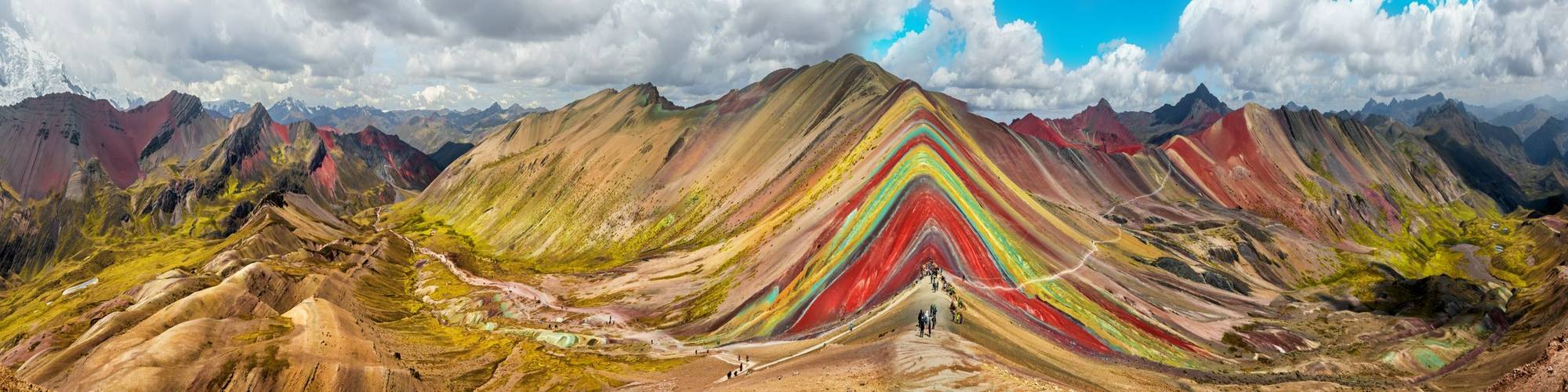
Rainbow Mountain gives you another perspective of the Andes, with enormous mountain landscapes and that famous stripe of colour across the slopes.
Then there’s Lake Titicaca, more time around Cusco and the Sacred Valley, and countless places I haven’t even mentioned here.
You could spend weeks exploring Peru and still feel like you’ve only scratched the surface, which is perhaps what I love most about it.
I went to Peru knowing I wanted to see Machu Picchu.
I left with memories that are difficult to put into words.
Of course I remember Machu Picchu, but I also remember everything that happened before I got there.
So if you’re looking at a trip to Machu Picchu, my advice would be simple: don’t just think about the destination. Think about the journey.
Take your time in Cusco, explore beyond the famous sites, eat everything you can, listen to your guides, take in the mountains, talk to the people you meet, look up at the stars - and let Peru surprise you.
Because Machu Picchu might be the place that first puts Peru on your bucket list.
But Peru is the reason you’ll want to go back.
Ready to experience Peru for yourself?
Whether you want the iconic Inca Trail or the quieter Tomacaya Route, EverTrek gives you the chance to experience Machu Picchu as part of a much bigger Peruvian adventure.
And if you want to keep the adventure going after Machu Picchu, EverTrek also offers extensions including Rainbow Mountain, the Amazon and Lake Titicaca.
Machu Picchu might be what brings you there, but the whole of Peru is what you'll remember!


Machu Picchu via the Inca Trail - The Way of the Incas
- The Inca Trail to Machu Picchu trek takes you on a journey through ancient legends, cloud forest magic, and rugged Andean beauty.
- This incredible 9-day hike is a bucket list must for any thrill-seeker craving a once-in-a-lifetime challenge that ends at one of the world’s greatest wonders.
- As you walk in the footsteps of the Inca, past crumbling ruins and misty mountain passes, you’ll feel a sense of adventure that stays with you long after the trek ends.

 View trip