
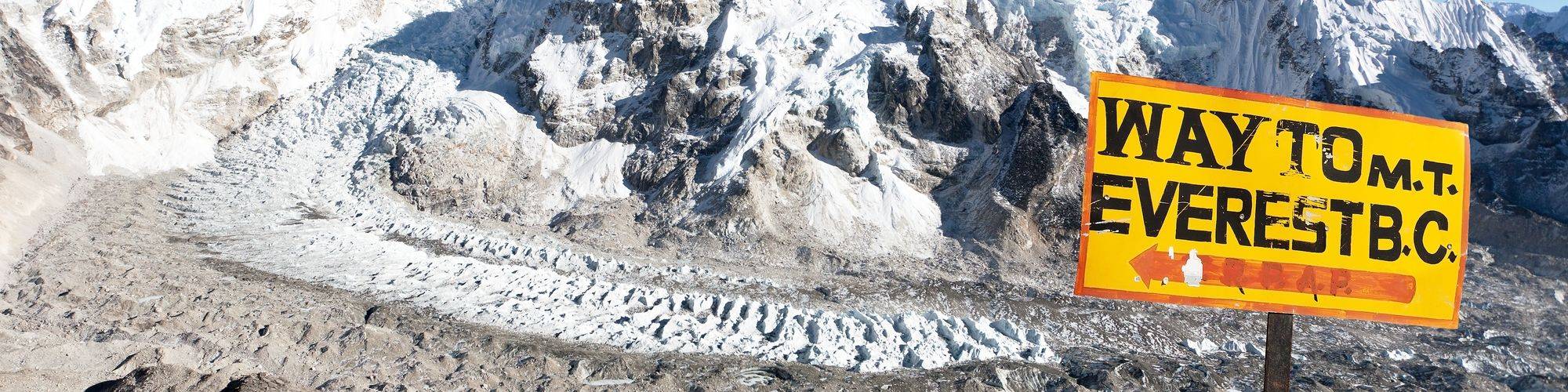
When thinking about the weather on the Everest Base Camp trek, one word covers it best: change. The Everest region experiences distinct seasonal weather patterns throughout the year, and choosing the right time to go can make the difference between clear mountain views and trekking through cloud and rain.
If you’re trekking with us at EverTrek, we’ve done a lot of that thinking for you. We only run trips to Base Camp during the best weather windows of the year. However you’re planning your Everest adventure, we’ve put together this guide so you can learn everything about Mount Everest weather, from season-by-season conditions to a month-by-month breakdown.
- Understanding the Weather of the Everest Region
- Unique Weather Phenomena on Everest
- What Is the Difference Between Mount Everest Summit Weather and Everest Base Camp Weather?
- Everest Base Camp Weather by Season
- Everest Base Camp Weather: By Season and By Month
- Frequently Asked Questions
Understanding the Weather of the Everest Region
Before we get into the specifics, it’s important to note that the Everest region sits at the intersection of several major weather systems. This is exactly why conditions can shift so dramatically across the year.
At lower altitudes, in villages like Namche Bazaar and Tengboche, temperatures and weather are relatively moderate. However, as you climb toward Everest Base Camp at 5,364m, the air thins, temperatures drop, and the weather becomes increasingly challenging.
Two weather systems dominate the Everest calendar:
- The Indian Monsoon sweeps in from the south each summer (roughly June to August), bringing with it heavy rainfall, cloud cover, and obscured mountain views across Nepal.
- The northern hemisphere jet stream dips southward in winter (November to February), bringing high winds, cold temperatures, and occasional heavy snowfall in the higher elevations.
The trekking sweet spots of spring and autumn sit either side of these two systems, which is why they account for the majority of Everest Base Camp treks each year.
Everest precipitation patterns
The Everest Base Camp region is fairly dry, with an average of 18 inches of precipitation received at Base Camp. Most of the precipitation that does fall (80%+) occurs during the monsoon season of June to August, and the rest of the year is fairly dry.
Monsoon moisture comes from the south, so Everest Base Camp experiences a rain shadow effect with most precipitation falling on the south side of the mountains (with the rain almost running out of steam as it were) before the clouds reach Base Camp.
The high elevation and generally cold temperature act as a controlling influence on the amount of moisture and limit its overall availability. This becomes evident when one compares Base Camp precipitation (18in) to that in Lukla (70in) at the start of the trek.
The actual summit of Everest receives very little precipitation as most of it is scoured by high winds which you can see sometimes with the spindrift on the summit.
Big winter snowstorms, while infrequent, are possible. Strong mid-latitude storms occasionally brush the region and can deliver over a meter of snow at Base Camp, which often takes trekkers by surprise. It's still possible to hike out, but be prepared with windproof bottoms and gaiters if planning a winter trek. Oh, and don't forget the down jacket, of course!
Wind and wind chill on Mount Everest
The summit of Everest might be the windiest place on Earth, with hurricane force winds buffeting the summit on over 50% of days during the windiest months.
From the middle of October until the start of April, the summit is subjected to winds that are almost continually in excess of 74 mph, equivalent to a Category 1 hurricane.
Lower wind speeds in May and warmer temperatures explain the relatively short climbing window.
During the winter, wind-chill-adjusted temperatures at the summit are as low as -70°C (-90°F), where exposed skin would be frostbitten almost instantaneously.
Wind chill and low temperatures combined with high elevation make the summit of Everest one of the least hospitable places on the planet during the winter. On the summit, wind chill temperatures can rival some of the coldest conditions on Earth - including -67.8°C (-90°F) in Siberia and -89°C (-128°F) at Vostok Station in Antarctica.
Everest’s climate extremes
- Coldest temperature on Summit: -60ºC (-76ºF)
- Warmest temperature on Summit: -19ºC (-2.2ºF)
- Highest wind speed on Everest: 175-177 mph (Category 5 hurricane equivalent)
- Everest’s summit is the windiest location on Earth
Unique Weather Phenomena on Everest
Mount Everest boasts an extremely unpredictable alpine climate, making it susceptible to unique weather phenomena including jet stream exposure and unpredictable shifts.
Cloud formations of Everest
The pyramidal shape and high winds around Mount Everest produce a rare cloud type known as a “Banner Cloud.” The Banner Cloud can be seen on otherwise cloudless days on the lee side of the mountain and forms as strong winds wrap around the mountain, creating a temporary low pressure cell on the lee side, which draws moisture upwards.
Only a few other peaks, like the Matterhorn in Switzerland, produce this same type of dynamic. It's commonly thought the cloud forms as Everest is the only mountain that actually projects into the jet stream, but recent research shows it's more likely due to the combination of high winds and the morphology of the mountain.
It’s said that the shape of the cloud on Everest is actually associated with the wind speed. At 50mph, the cloud is at a right angle to the peak. When the wind speed is stronger, it tilts down (conversely tilting up when the wind speed is weaker).
Forecasting the weather on Everest
The nearest weather station to the Everest summit is at Lobuche and is known as the “Pyramid Station.” The weather station is at an elevation of 5,079m and has been operating since 2006.
Obtaining accurate forecasts at the summit is essential for climbers and many teams hire meteorologists to produce daily spot weather forecasts. Forecasts are made by combining on-the-ground observations with large-scale weather models.
It can generally be assumed that the temperature gradient between base camp and the summit is approximately +1ºC per 150 metres of altitude.
Climate change and Everest
The small museum at the Everest view point in Namche Bazaar has some great historical photos of the Khumbu Glacier.
Looking at these photos, it’s not at all evident that the Khumbu Glacier is retreating because it has held the same position during the last 50 years. However, looks can be deceiving, and while the glacier is not retreating, it is thinning and losing volume.
Thinning occurs as a result of sublimation (direct evaporation of the ice) as opposed to melting. Sublimation occurs as temperatures are frequently below zero and the glacier never has a chance to actually melt.
What Is the Difference Between Mount Everest Summit Weather and Everest Base Camp Weather?
This is very important to clarify, since summit conditions will bear almost no resemblance to what you’ll experience when trekking to Base Camp.
Weather at the Mount Everest summit
At Mount Everest’s summit (8,849m), weather conditions are extreme year-round. The coldest Mount Everest temperatures can drop as low as -40°C to -60°C with wind chill, and the jet stream can produce wind speeds exceeding 125mph. The temperature on top of Mount Everest averages -37°C.
For this reason, summit attempts are only possible in a very narrow weather window, which is typically a matter of days in May or October. This is when the jet stream shifts far enough north or south to allow for a safe ascent. However, if you’re travelling to Base Camp, this will have nothing to do with your trek.
Weather at Mount Everest Base Camp
At Everest Base Camp (5,364m), weather conditions are challenging but very manageable with the right trekking kit and training preparation. When trekking to Base Camp, you’ll be more than 3,400m lower than the summit, and while nights can be cold, daytime trekking in spring and autumn can actually be quite pleasant.
Everest Base Camp Weather by Season
Spring (March to May)
Spring is, without a doubt, the best time to trek to Everest Base Camp. The days are warm and clear, mountain views are spectacular, and the rhododendron forests lower on the trail burst into bloom.
Temperatures at EBC during the day can reach around 0 to 5°C, while lower villages like Namche Bazaar can be pleasantly warm. Trekkers in t-shirts are a common sight!
May in particular brings some of the finest Everest weather of the year, which is why it’s peak season for Everest summit attempts. However, evenings cool down sharply at altitude. Expect temperatures to drop to around -10°C or lower at Base Camp, even in spring. Layers are essential!
Summer (June to August)
Summer in the Everest region is governed by the Indian Monsoon. June through August brings heavy and persistent rainfall, thick cloud cover, and frustratingly obscured mountain views.
Trekking is still technically possible, and some trekkers enjoy the lesser crowds, but it isn’t a recommended time to visit.
Nepal begins to emerge from the monsoon at the end of August. Early September can still be unsettled, but conditions tend to improve as the month progresses.
Autumn (September to November)
Autumn is probably the most visually stunning time to trek to Everest Base Camp. The post-monsoon air is crystal clear with dramatic views of the Himalayan peaks and comfortable temperatures throughout September and October.
Lower on the trail, you could even see temperatures close to 20°C, but don’t be fooled. The nights remain cold!
By November, temperatures begin to fall sharply. Evenings at Base Camp can reach -10°C or below. That being said, October and early November are still excellent months for the EBC trek. It’s also the time of Nepal’s biggest festivals, including Dashain and Tihar.
Winter (December to February)
Winter on the Everest Base Camp trek is cold, quiet, and very rewarding for those willing to embrace the weather! The trails are at their least crowded, with beautifully clear skies. There’s also a real sense of achievement in completing an EBC trek in the harshest season.
Daytime temperatures at lower elevations can be comfortable when the sun is out, but at Base Camp, temperatures can plummet to -20°C and below. Wind chill at higher elevations can make it feel even colder.
For this reason, a proper winter kit is non-negotiable. And, if you trek EBC with us, you’ll benefit from down jacket and sleeping bag hire to help you stay warm.
Plan your Everest Base Camp trek with EverTrek today
We hope this Everest weather guide answers all of your questions about what the weather is like on the Everest Base Camp trek. Whatever the weather, whatever time of year you go, it's a very real and extreme challenge. However, it's one that is achievable, unforgettable, and so worth it.
If you’ve got more questions, or just want to chat about trekking, get in touch or take a look at our FAQs below.
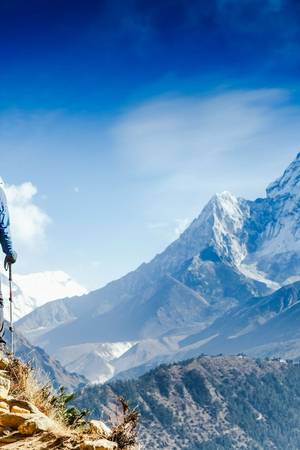
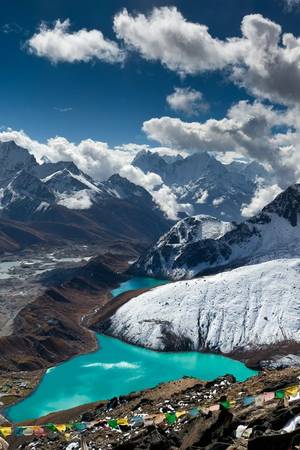
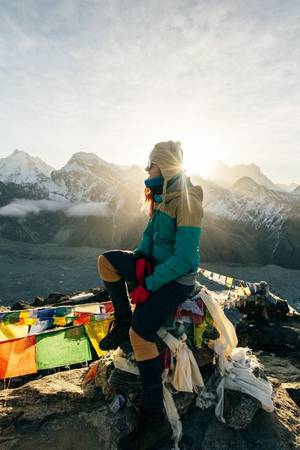
Everest Base Camp Via Gokyo Valley
- This trek package is more than seeing Everest from a different angle.
- Trekking to Everest Base Camp via Gokyo Valley takes you beyond the classic route, through peaceful Sherpa villages, past the stunning turquoise lakes of Gokyo, and up to the breathtaking viewpoint of Gokyo Ri.
- You'll cross the dramatic Cho La Pass before rejoining the main trail to Base Camp.
Everest Three Passes trek
- Trekking in the Himalayas doesn’t get much wilder than this.
- If you’re looking for a true Everest adventure, our 19-day Three Passes Trek is the expedition for you.
- You’ll cross Renjo La, Cho La, and Kongma La to form a challenging circuit through some of the most remote, rugged, and awe-inspiring terrain in Nepal.
Ultimate Island Peak and Everest Base Camp Expedition
- This is the full trekking Himalayan experience, offering an epic loop through the Khumbu region.
- This Island Peak and Everest Base Camp trek throws in everything from Gokyo’s glacial lakes to the legendary passes of Cho La and Kongma La.
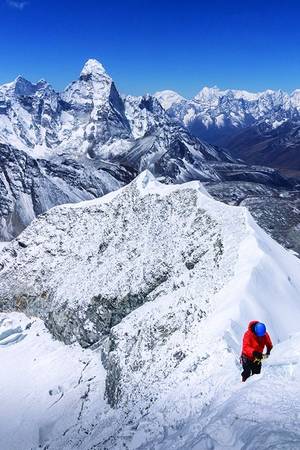
- After ticking off Everest Base Camp, you’ll swap trekking poles for ice axes as you rope up for the ultimate finale: a climb to the summit of Island Peak at 6,189m.
Frequently Asked Questions

 View trip