

Download the full Trip Guide
What’s Included in Your TMB Trek?
Meals
Delicious breakfast and dinner on the trek
Accommodation
All accommodation Included - Mix of twin rooms and mixed-gender dorms. Shared accommodation is standard across all trips: solo trekkers will share twin rooms with another same gendered trekker or mixed-gender dorms.
Expert Guides, Porters & Permits
Qualified (English speaking) mountain guides - Alpine professionals who know every pass, peak, and path.
In-Country Transfers
Airport welcome & hotel transfers, then back to the airport at the end.
Luggage Transfers
Luggage transfers included, so you only need to carry a daypack, making your trek more enjoyable.
What's included?
-
Airport Pick-up and Drop-off service in a private vehicle
-
All accommodation - Mix of twin rooms and mixed-gender dorms
Shared accommodation is standard across all trips: solo trekkers will share twin rooms with another same gendered trekker or mixed-gender dorms. -
All internal transport
-
EverTrek pre-trip support
-
All necessary trekking permits
-
Breakfast and dinner on the trek
-
Qualified guide
-
Luggage transportation
-
Fill up your containers along route with safe drinking water
-
EverTrek Trip App with countdown timers, maps and loads more.
-
Exclusive equipment discounts from Ellis Brigham, Osprey, The Altitude Centre and heaps more
What's not included?
-
International flights
-
Lunch (this can be purchased locally)
-
Personal expenses including mineral water, and alcoholic drinks and beverages.
-
Cable Car costs (usually around €18 each ride, expect to use them at least 2/3 times)
-
Tips (It is not customary or expected to tip your Guide in Europe but you may do so at your discretion)
-
Your altitude travel insurance
-
Any other extended trips or additional accommodation or transport
-
We are unable to provide accommodation or extra transfers for additional nights in Europe
Why Trek the Tour du Mont Blanc with EverTrek?
We include premium features that other providers charge extra for or don't offer at all.
The EverTrek Difference
We go the extra mile – before you even hit the trail!
Trek Planning Tools
Get access to our mobile app with maps & countdown.
PLUS Get a FREE training plan from The Altitude Centre
Book now and you can get a FREE consultation & training plan from The Altitude Centre!
Download the full Trip Guide
Find out all of the awesome details about the trip and download the full guide and walkthrough right here.
Download the full Trip Guide
Find out all of the awesome details about the trip and download the full guide and walkthrough right here.
Sustainable Tourism
Because we only use local guiding teams it ensures your trip directly benefits the local mountain communities.
Tour du Mont Blanc Trek Highlights
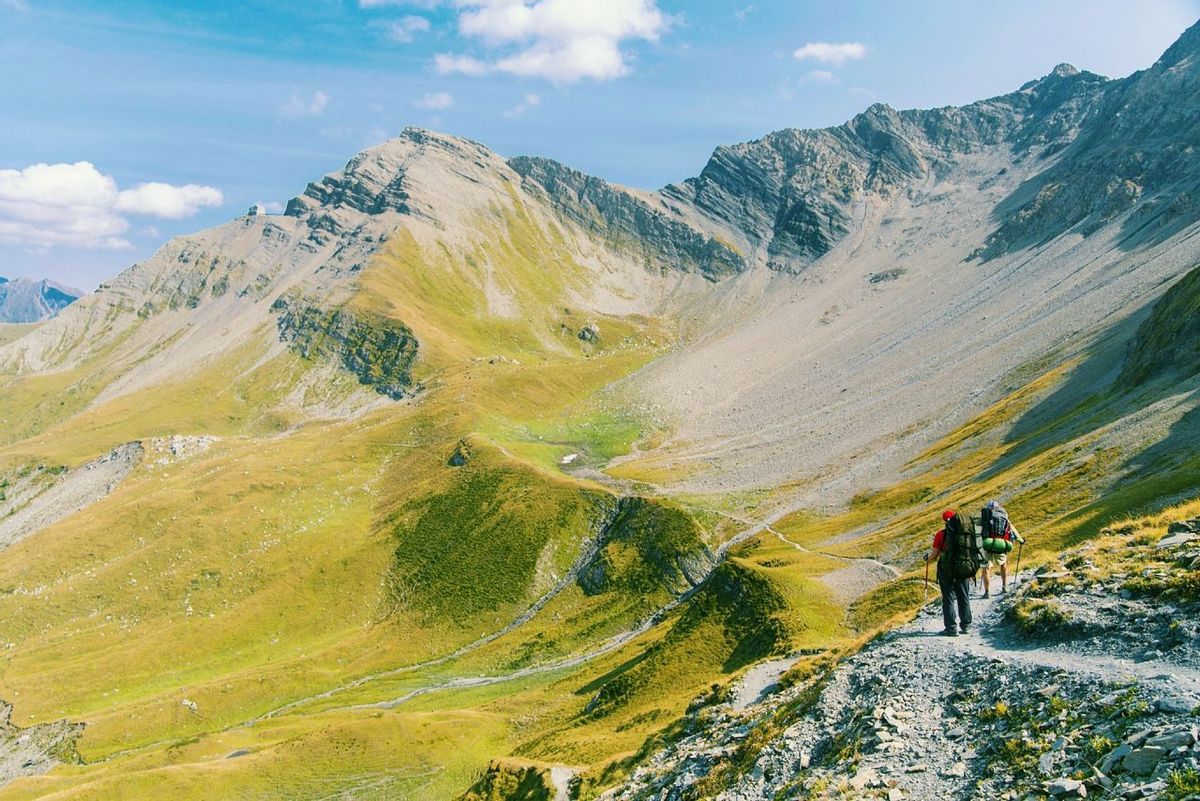
Trek beneath the shadow of Mont Blanc, Europe’s highest peak, with jaw-dropping alpine views around every corner.
Explore three stunning countries in one epic loop, crossing borders on foot through meadows, forests and high passes.
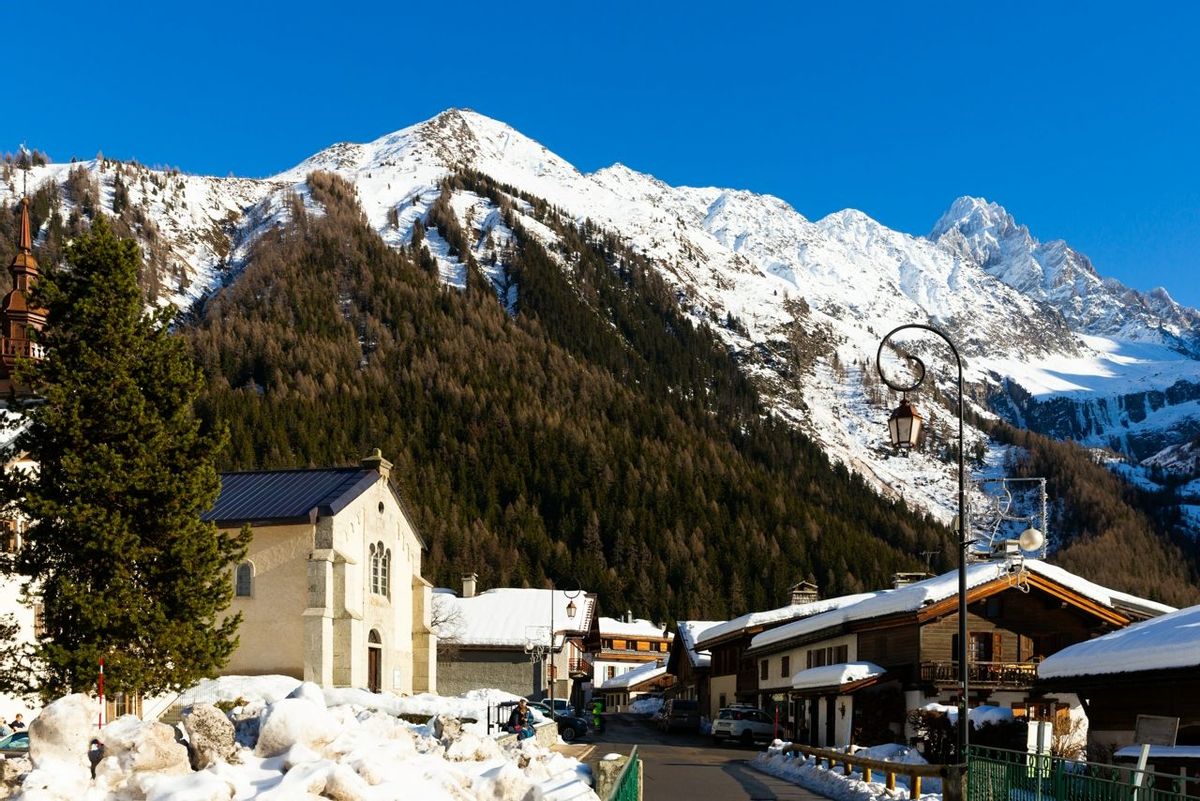
Discover charming Alpine villages, where cowbells ring, fresh croissants await, and local wine flows like mountain streams.
Feel the thrill of conquering dramatic cols, as you hike across legendary mountain passes carved by centuries of adventure.
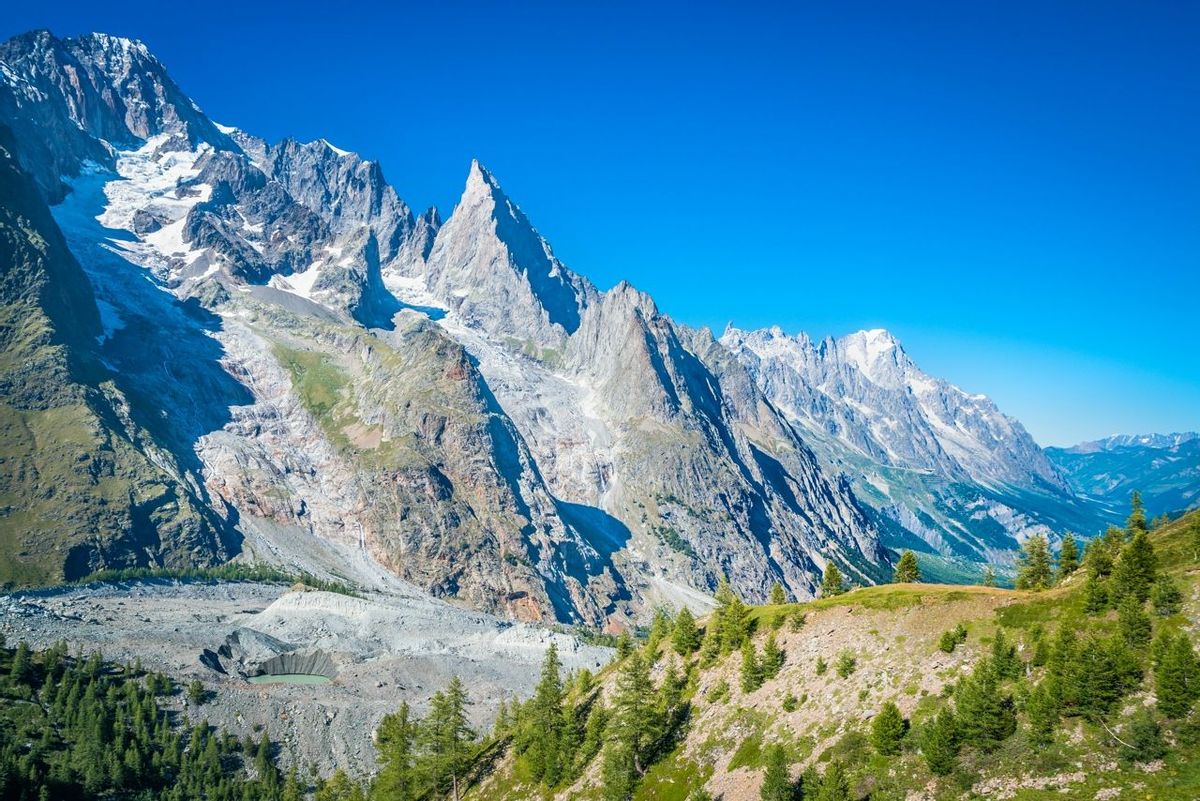
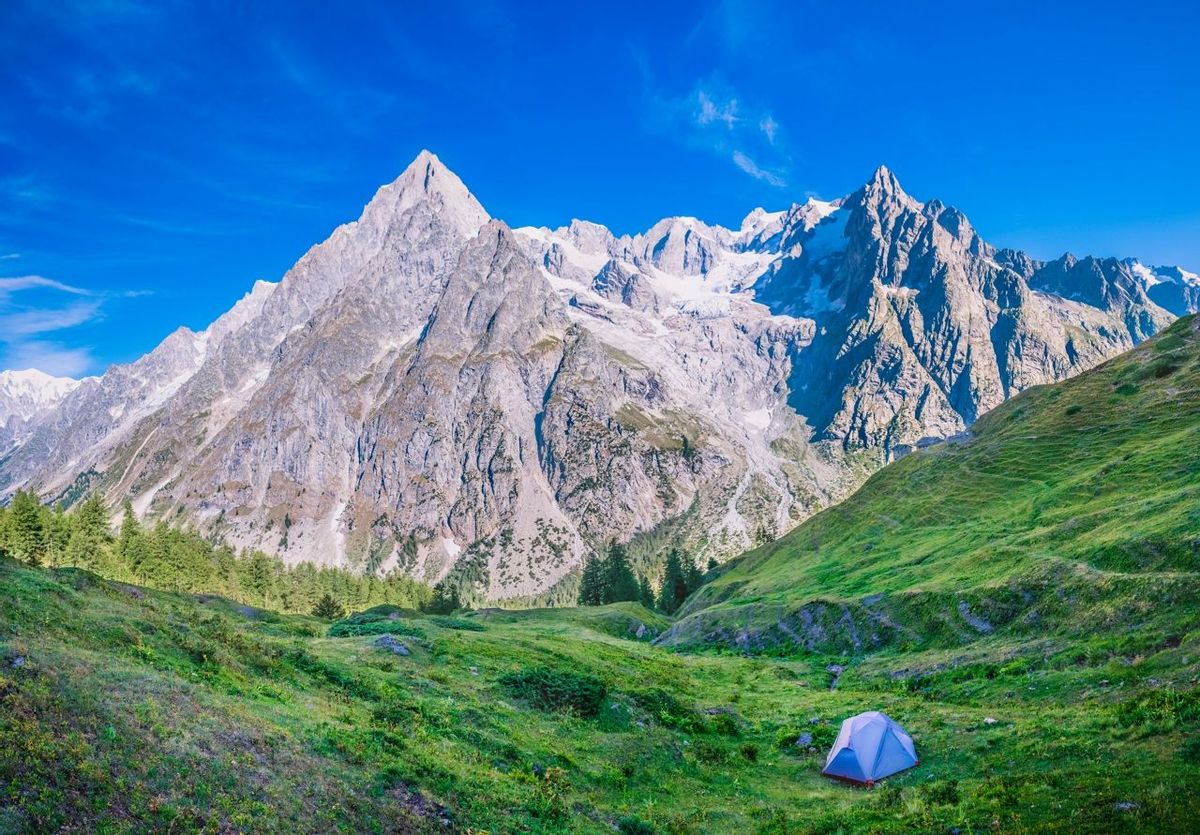
Soak up glacier-fed valleys and snow-dusted peaks, where every bend in the trail opens up a new slice of mountain magic.

9-Day Tour du Mont Blanc Trek Itinerary
Ciao and welcome to Italy!
You should book your international flights to arrive at Geneva Airport in Switzerland on Day 1 of your itinerary. Please aim to arrive at Geneva Airport before 12pm. This gives you time to settle into the charming alpine town of Courmayeur before your Tour du Mont Blanc trek begins.
After flying into Geneva Airport and being treated to a stunning view of the mountains as your flight descends, our team will meet you at arrivals and transfer you to the beautiful resort town of Courmayeur. During your transfer, you will drive the impressive Mont Blanc Tunnel, cutting right through the middle of the Massif that you will spend the next week trekking around!
Today there will be an optional short afternoon hike to warm up and explore your incredible alpine surroundings, preparing you for the start of your Mont Blanc hiking tour tomorrow!
Your Tour du Mont Blanc hike begins with a short transfer from Courmayeur to the picturesque Arnouva Val Ferret, where your hike truly kicks off.
Today you'll conquer the stunning Col Ferret Pass at an impressive 2,550 meters, crossing the Italian-Swiss border on one of the most spectacular sections of the Mont Blanc trek.
After reaching the pass, you'll descend into the charming Swiss town of La Fouly, where you’ll spend the night in cosy shared dorms. Get ready for a day filled with breathtaking scenery, unforgettable views, and your first real taste of the Mont Blanc tour.
Approx. mileage: 11.25 miles / 985m incline / 8hr day
Today kicks off with a short transfer to Plan de L’Au, where the Tour du Mont Blanc trek heats up with a challenging climb through lush forests and rocky terrain.
Along the way, you'll pass stunning waterfalls and river crossings before reaching Alpage de Bovine, where you’ll enjoy a well-earned lunch surrounded by breathtaking views, alpine cows, and the gentle chimes of their bells. After lunch, you'll continue a short climb up to around 2,050m before beginning your long descent through the forest trails into the picturesque village of Trient.
From here, you'll transfer to tonight's cosy haven, ready to rest and recharge before continuing your Mont Blanc trek tomorrow.
Approx. mileage: 7.85 miles / 782m incline / 6hr day
Today starts with a short transfer back to yesterday's finishing point in Trient, where your Tour du Mont Blanc guided hike continues
This morning, you'll tackle a long and steep ascent through the forest to reach the Col de la Balme pass (2,195m), perched on the Swiss-French border. From the pass, you'll be rewarded with your first breathtaking view of Mont Blanc, the most important highlight of any Mont Blanc trekking adventure.
After savouring a well-earned lunch with this stunning backdrop, you'll descend through alpine meadows and ski slopes into the charming French village of Argentiere.
From there, you'll transfer to the vibrant heart of Chamonix, where you'll stay at Hotel Plan B, ready to share tales of your Mont Blanc hiking tour adventures.
Approx. mileage: 9 miles / 1050m incline / 7hr day
Today could be your well-deserved rest day, giving you time to recover and recharge before continuing your Tour du Mont Blanc trek.
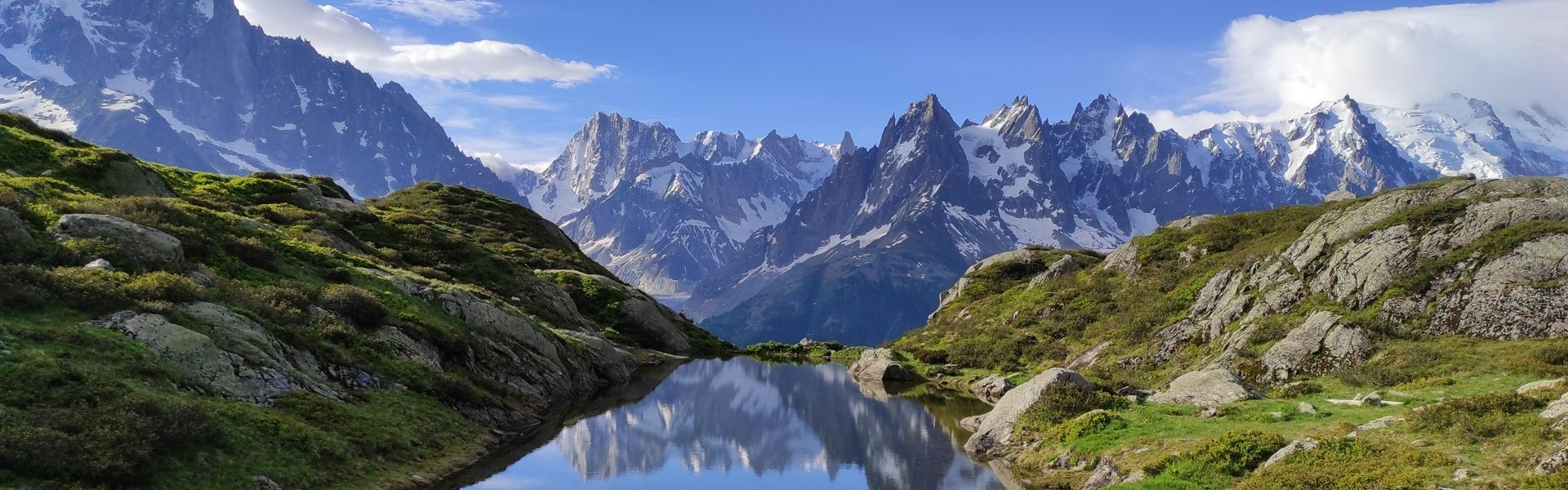
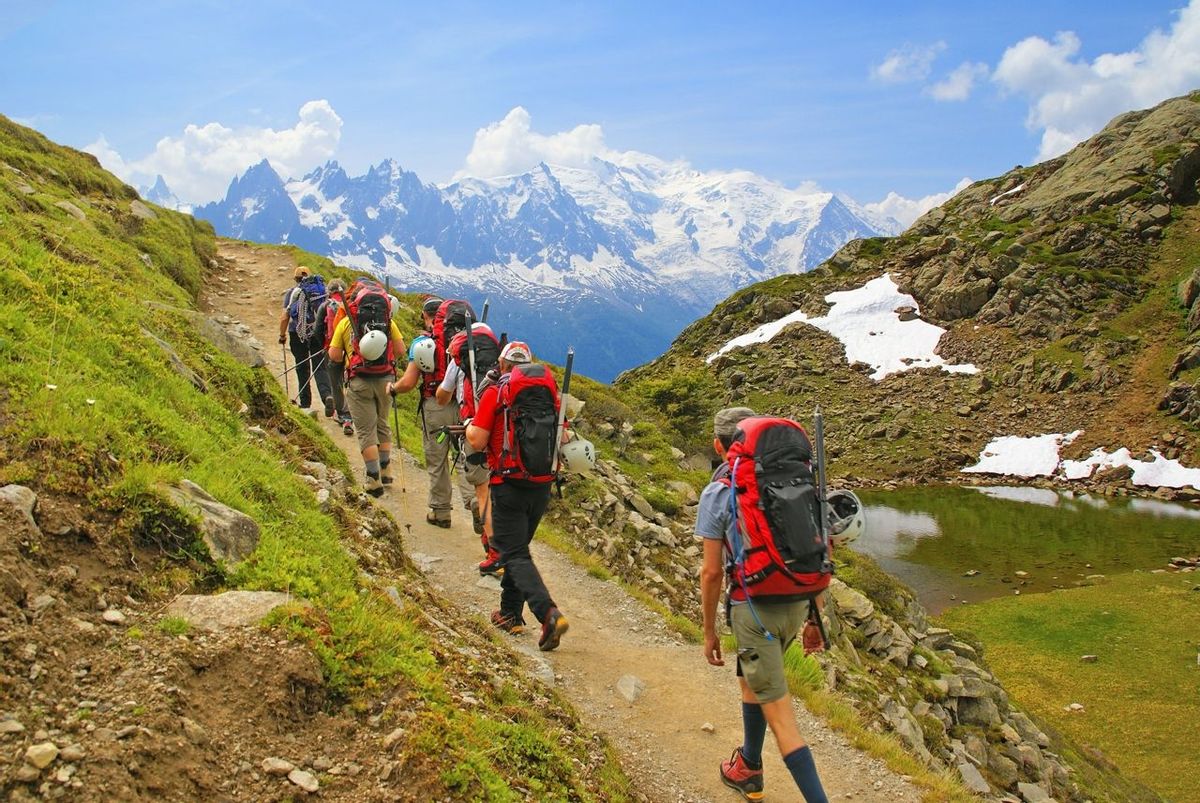
However, if you're feeling adventurous, you can choose to hike to the famous Lac Blanc. This unforgettable hike takes you to pristine blue lakes nestled in the mountains, offering spectacular panoramic views of the Mont Blanc Massif. It’s one of the most iconic viewpoints of the entire Mont Blanc hike.
Your journey begins with an exhilarating cable car ride (€23 return) to La Flégère, before a rocky ascent to the breathtaking alpine lake.
At the summit, you’ll find a small cafe where you can relax, eat, and absorb some of the most awe-inspiring scenery.
Tonight you’ll spend a second night at Hotel Plan B.
Approx. mileage: 6 miles / 660m incline / 5hr day
Today's Mont Blanc trek begins with a short transfer to Les Houches . From here, you’ll take a cable car (€18) to Bellevue (1,801m), where your hike begins high in the mountains.
The trail starts with a gradual climb before crossing a thrilling suspension bridge overlooking the valley below.
After reaching today's pass, Col Tricot, you’ll descend steeply into the charming town of Saint-Gervais-les-Bains, where you'll indulge in a delicious lunch. Refreshed and ready, you'll tackle a final short incline to Refuge du Truc (1,720m) before descending into the picturesque village of Les Contamines-Montjoie.
Tonight, you'll unwind in shared bunkhouse accommodation at Camping le Pontet, after another memorable day of trekking around Mont Blanc.
Approx. mileage: 10 miles / 700m incline / 7.5hr day
Today’s Tour du Mont Blanc hike begins directly from your accommodation, launching straight into a long ascent up to the Col du Bonhomme pass at 2,300 meters.
After taking some time to enjoy the breathtaking mountain views, you'll continue along a rocky trail that hugs the mountainside, gaining a bit more elevation until you reach the Col de la Croix du Bonhomme at 2,440 meters.
Here, you'll stop at a traditional mountain refuge for lunch before beginning the long descent into the valley of Bourg-Saint-Maurice. From here, you'll take a short transfer to the Base Camp Lodge, where you can relax and eat following another incredible day trekking the Mont Blanc tour route.
Approx. mileage: 11.4 miles / 1370m incline / 8hr day
Today marks the grand finale of your Tour du Mont Blanc trek!
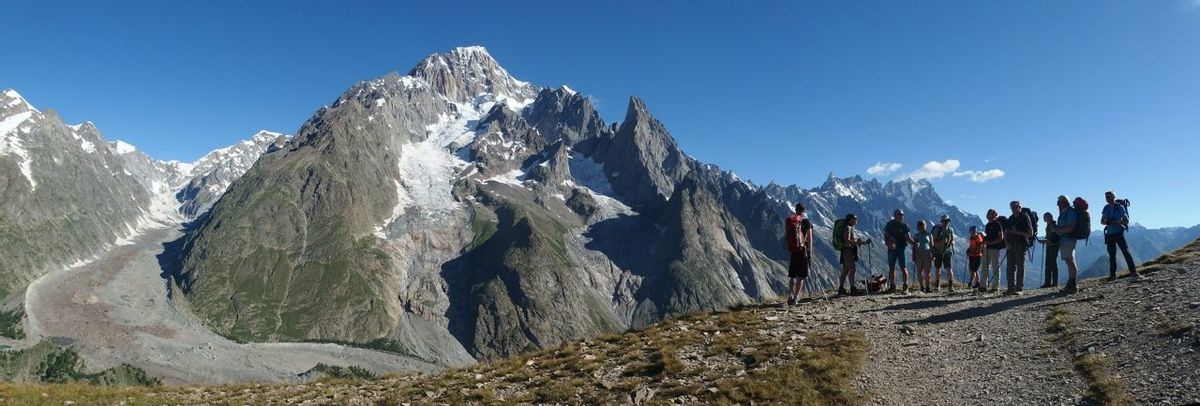
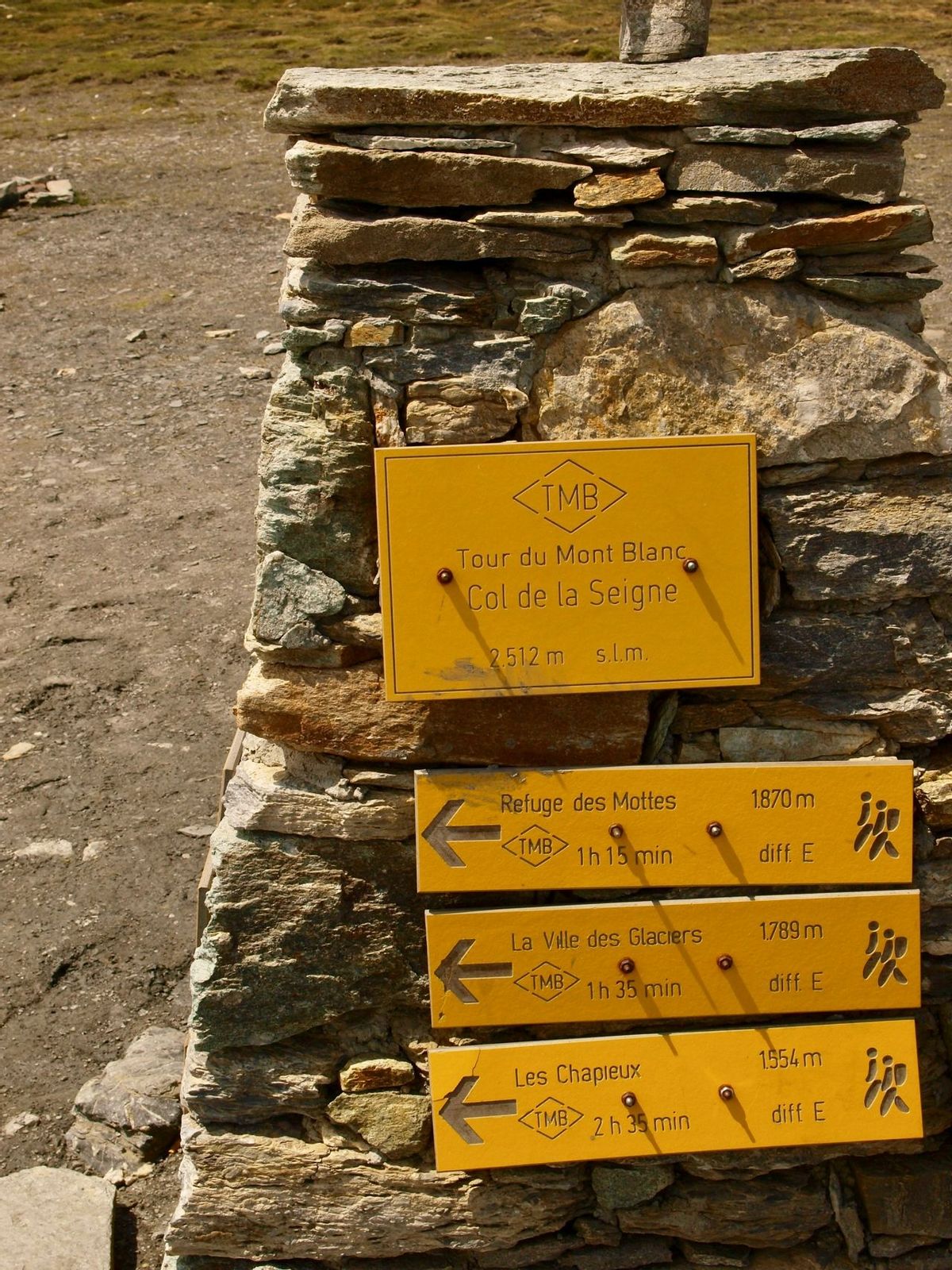
After a short transfer to La Villes des Glaciers, you’ll begin with a gentle climb along a gravel trail before tackling the exhilarating climb up to the stunning Col de la Seigne pass at 2,516 metres. . This mountain pass sits on the border between France and Italy and offers majestic views of the Mont Blanc Massif.
After descending from the pass, you’ll enjoy a well-earned Italian lunch before continuing along a flat, scenic trail to Val Veny, where your Mont Blanc hiking tour officially comes to an end.
From here, you’ll transfer back to Courmayeur to celebrate completing the Mont Blanc trek, one of Europe’s most iconic!
Approx. mileage: 10.5 miles / 846m incline / 5.5hr day
Today, it's time to say goodbye to Italy and the incredible Tour du Mont Blanc.
As your Tour du Mont Blanc guided tour comes to an end, you’ll leave with unforgettable memories of trekking around the Mont Blanc Massif through France, Switzerland, and Italy.
We will arrange your private transfer to Geneva Airport in plenty of time for your return flight home. All you need to do is make sure your international flight departs after 2:00PM.
Tour du Mont Blanc Trek Dates & Prices
Food & Accommodation on Your Tour du Mont Blanc Trek
During your time trekking through the Italian, Swiss, and French Alps, you’ll experience a fantastic variety of meals and accommodation styles, from comfortable hotels to authentic mountain refuges. Good food, hearty portions, and cosy overnight stays are all part of the adventure, helping you recharge after full days on the trail.
Your Accommodation Overview
- 3* hotel before & after
- Authentic mountain lodges/bunkehouses
- Half board on trekking days
- Wi-Fi available (charges may apply)
Accommodation on Your Tour du Mont Blanc Trek
On this trip, you’ll stay in a mix of cosy hotels, mountain hostels, and traditional alpine refuges, each offering a comfortable place to rest and refuel after a full day on the trail.
| Nights | Location | Type | Room Type |
|---|---|---|---|
| 1 | Courmayeur | Hotel Centrale | Twin-share, En-Suite |
| 2 | La Fouly | Gite la Lechere | Bunkhouse |
| 3 | Trient or Martigny | Hotel du col de la Forclaz (Trient) or Hotel Alpes et Rhones (Martigny) | Bunkhouse |
| 4 & 5 | Chamonix | Hotel Plan B | Bunkhouse |
| 6 | Les Contamines | Camping le Pontet | Bunkhouse |
| 7 | Bourg-Saint-Maurice | Base Camp Lodge | Bunkhouse |
| 8 | Courmayeur | Hotel Centrale | Twin-share, En-Suite |
In Courmayeur at the start and end of the trek, you’ll stay in hand-picked 3* hotels. Rooms are typically twin-share with private bathrooms depending on the hotel.
During trekking days, you’ll stay in shared dormitory-style accommodations in authentic mountain refuges or bunkhouses. These are basic but clean and full of mountain charm, often with incredible views right outside your window. Rooms are shared and vary from smaller dorms (4-6 people) to larger shared spaces (up to 10-12 people).
Hot showers are available most nights, although some mountain huts may charge a small fee for showers. Bedding is provided, but a lightweight sleeping bag liner is recommended for extra comfort.
A good sleeping bag liner, earplugs, travel towel and comfortable clothes for the evenings can make your stay more comfortable for the night.
You'll find hot showers in the vast majority of the accommodation, but you'll want to pack light with a travel towel. It's also worth bringing some cash in case there is a small fee for the shower. Travel wips are your friend when trekking,
Mountain refuges are often sociable stops for many trekkings and it's all part of the Tour Du Mont Blanc experience, adding to the atmosphere of the trails.
Food on Your TMB Trek
While staying in Courmayeur, Chamonix, Martigny, and Bourg-Saint-Maurice, you’ll enjoy hearty breakfasts and evening meals in hotels, mountain lodges, or local restaurants. Meals here are typically a mixture of alpine classics and local Italian, Swiss, and French specialities - think cheesy tartiflettes, hearty pasta dishes, delicious pastries, and of course, plenty of good coffee. When you are staying in refuges or bunkhouses along the trail, meals are communal and plentiful. You’ll typically be served a filling three-course meal in the evening, often including homemade soups, meat or vegetarian mains, and local desserts. Breakfasts are usually continental style, and packed lunches can be purchased locally on trekking days.
| Days | Breakfast | Lunch | Dinner |
|---|---|---|---|
| 1: Courmayeur (Arrival Day) | |||
| 2-8: Trekking Route | |||
| 9: Courmayeur (Departure Day) |

While you may not be trekking at high altitude on Tour du Mont Blanc, any multi-day trek needs proper hydration so make sure you've got plenty of water and top up at any available rest point. The weather in Europe is heating up, so you may find that you need more water than usual during any heatwaves.
Filter Water Wherever You Go
For extra peace of mind on your adventure, our branded Water-to-Go bottles filter up to 99.9999% of contaminants from non-saltwater sources while helping reduce single-use plastic.Use code evertrek20 to receive 20% discount at checkout.
Purchase your EverTrek Water-to-Go bottle here.
Difficulty:
Challenging
How challenging is the trek?
The Tour du Mont Blanc may not reach Himalayan altitudes, but make no mistake, this is no gentle stroll. Covering approximately 100 km with over 6,000 metres of ascent and descent, the TMB is a true multi-day mountain adventure circumnavigating Western Europe’s highest peak, Mont Blanc (4,810 metres).
You’ll cross several high mountain passes, some exceeding 2,500 metres, trek for 6 to 8 hours a day, and climb the equivalent of Everest more than once over the duration of the trek.
But the rewards? Breathtaking alpine views, cosy mountain refuges, world-class trails, and fresh croissants to start your mornings.
It’s a physically demanding challenge, especially when sustained over consecutive days, but absolutely achievable with some training and the right mindset.
Pre-Trek Fitness Prep
To take on the TMB comfortably, you should be able to:
- Hike 6 to 8 hours a day, with a 7 to 10kg daypack
- Tackle 800 to 1,200m of ascent and descent daily
- Train on hilly terrain or stairs, with a focus on back-to-back hiking days
- Build solid leg strength, endurance, and balance
You don’t need to be a mountain goat, but you’ll enjoy the TMB a lot more if you’ve put the training in. A few months of weekend hill walks, strength work, and longer hikes will go a long way.
What to expect on the trek
Altitude challenges
Unlike Himalayan adventures, the Tour du Mont Blanc doesn’t reach extreme altitudes, the highest point on the route is the Col des Fours at 2,665 metres. While altitude sickness is uncommon at this height, you’ll still notice the thinner air compared to sea level, especially on long climbs.
The real test lies in the daily elevation gains and cumulative fatigue from trekking over several high mountain passes, often one after another, across multiple days.
Duration
The EverTrek itinerary of the Tour du Mont Blanc is a 9-day trek, covering major highlights as you loop through France, Italy, and Switzerland. Most days involve 6 to 8 hours of walking, with challenging ascents and descents that can add up quickly.
While some travellers break up the route or opt for shorter itineraries, doing the full trek over multiple days, without skipping sections, offers a truly immersive and rewarding experience of this iconic alpine journey.
Terrain
You’ll be hiking on a mix of:
- Well-marked trails, mountain switchbacks, rocky sections, and forest paths
- Long ascents and steep descents, often with loose gravel or scree
- Occasional snow patches early in the season (June), and narrow ridges in places
The trail is not technical, but trekking poles and strong knees are highly recommended – especially for the descents.
Weather
The Alps can dish out four seasons in a day. While summer (June to September) is the main trekking season, weather can still shift quickly. Expect:
- Warm sunny days in the valleys
- Cold, windy conditions over high passes
- Occasional thunderstorms and rain showers
Layering is key – pack for sun, rain, wind, and chilly mornings, even in the peak of summer.
The Tour du Mont Blanc is one of Europe’s greatest trekking routes, and for good reason. It’s challenging, stunning, and immersive, taking you through three countries, countless landscapes, and more cheese and cake than you thought possible on a trek.
Essential Kit for the Tour du Mont Blanc
Explore our essential kit picks so you're comfortable, safe, and ready for every step. Download the full checklist to nail your packing.
Waterproof jacket
A versatile gore-tex or similar material jacket is ideal for year round walking, hiking and trekking in the roughest weather. Jackets like the Latok Mountain GORE-TEX® Pro Jacket offer great weather protection and breathability when you need it.
Insulated jacket
A down or synthetic insulated jacket is a must for sub-zero conditions. Jackets like the Montane Anti-Freeze XT Down Hoodie use water-resistant down for an excellent warmth-to-weight ratio, with features like high collars and storm flaps to trap heat.
Sleeping bag
A warm and reliable down-filled sleeping bag is essential for multi-day trekking or backpacking adventures. The Rab Ascent 700 is a great example, made with recycled materials and designed for both regular camping and mountain use.
Base layer top
A warm and breathable long-sleeve base layer, combining materials like Merino wool and synthetic fibres, helps regulate body temperature in various outdoor conditions. The Helly Hansen Lifa Merino Midweight is one such example.
Trekking shorts
Lightweight and durable walking shorts are ideal for fast-paced mountain hikes. Shorts like Montane's Tenacity Lite use stretch fabrics to offer protection from wind and abrasion.
Trekking trousers
Tough, lightweight and versatile trousers are perfect for a range of outdoor activities. The Montane Terra Pants continue to be a go-to choice for everything from trekking to scrambling.
Trekking poles
Lightweight yet sturdy walking poles help with balance and reduce strain on steep or uneven terrain. The Leki Khumbu Lite poles are a popular option for hill walking and mountain hiking.
Mountain sunglasses
Protective and high-performance sunglasses are important for alpine environments. Sunglasses like the Julbo Shield Reactiv combine style with serious high-mountain protection.
Leggings
Lightweight leggings with moisture-wicking fabrics are ideal for active use. The North Face Flex High Rise Leggings offer comfort and sweat management during exercise.
Technical T-shirt
A moisture-wicking technical tee is essential for active days in the hills. The Rab Force T-Shirt is a reliable choice for mountain walkers and runners alike.
Hiking boots
Supportive and grippy walking boots are key for long hikes and rugged trails. The Salomon Quest 4 GTX boots are built for demanding conditions and multi-day use.
Hiking socks
A good pair of merino-blend walking socks helps keep feet warm and comfortable on long walks. The Bridgedale Merino Hiker socks are a dependable option for various terrains.
Daypack
A 30-35L daypack is a great size for longer hikes or overnight trips. Packs like the Osprey Talon 33 balance load well and offer good back ventilation.
Fleece mid layer
A soft, insulating fleece is great for layering on cooler days. The North Face Cornice II is a sustainable option made from recycled materials.
Warm beanie
A warm and comfortable beanie is ideal for cold weather walks or everyday use. The Mountain Equipment Humbolt Beanie fits the bill.
Hydration reservoir
A 2-3L hydration bladder helps you stay hydrated on the move. The Osprey Hydraulics 3L Reservoir is stable, easy to use, and reliable.
Water bottle
A durable, wide-mouth bottle is handy for refilling on the go. Nalgene's Sustain 1L Water Bottle is a classic, perfect for day hikes or longer trips.
Waterproof gloves
Warm, waterproof gloves are essential for wet and cold mountain days. Gloves like the Montane Respond Dry Line offer protection and dexterity in tough conditions.
Headtorch
A compact and bright headtorch is important for early starts or late finishes. The Petzl Tikka 350L is simple to use and effective for low-light navigation.
Sleeping mat
A lightweight and compact sleeping mat adds essential insulation and comfort for overnight stays outdoors. Mats like the Therm-a-Rest NeoAir XLite NXT offer excellent warmth-to-weight performance, making them a solid choice for backpacking and wild camping.
Portable power bank
A high-capacity power bank is a great way to keep your devices charged on multi-day trips or when you're off the grid. Options like the Anker PowerCore 20000mAh offer multiple charges for phones and other electronics, making them ideal for camping, backpacking, or travel.
Explore our essential kit picks so you're comfortable, safe, and ready for every step. Download the full checklist to nail your packing.
FAQs
The Tour du Mont Blanc (also known as TMB) is one of Europe’s most famous long-distance hiking routes. The trail circles the Mont Blanc Massif, a 400km² mountain range in the Western Alps, bordering France, Italy, and Switzerland.
Our guided Tour du Mont Blanc hiking route covers roughly 100km / 62 miles, over 7 trekking days within a 9-day trip.
The Tour du Mont Blanc trek has several starting points, with the most popular being Courmayeur (Italy), Chamonix (France), and Les Houches (France). The EverTrek Tour du Mont Blanc trek begins in Courmayeur, one of the most scenic starting points.
The Tour du Mont Blanc trek reaches a maximum altitude of roughly 2,537m at the Grand Col Ferret, bordering Italy and Switzerland. It is the ideal trek if you’d like a high-alpine hike without the risk of extreme altitude.
The Tour du Mont Blanc trek with EverTrek costs from £2,645, depending on your chosen departure year. This includes a 9-day Tour du Mont Blanc itinerary (with 7 days of trekking), accommodation in a mix of hotels, refuges, and mountain lodges, most breakfasts and dinners during the trek, experienced local guides, airport transfers, baggage transfers between accommodations, and full support from the EverTrek team.
International flights, travel insurance and lunches are not included.
To ensure your Tour du Mont Blanc airport transfers are included, please book your inbound flight to arrive no later than 12pm on Day 1, and your outbound flight to depart after 2pm on the final day of the trek.
If your flights fall outside these times, you'll need to arrange your own transport to or from the airport.
Please note, the group transfer will be to and from Geneva Airport in Switzerland at the start and end of the trip.
EverTrek’s Tour du Mont Blanc starts in the beautiful resort town of Courmayeur in Italy, and continues through Italy, Switzerland, and France, completing the famous circular route around the Mont Blanc Massif
This classic Mont Blanc trek passes through alpine landscapes, high mountain passes, glaciers, wildflower meadows, and traditional mountain villages. Our route is carefully planned to include some of the most scenic parts of the Tour du Mont Blanc hike.
The Tour du Mont Blanc trek is considered a challenging hike and requires a good level of fitness. You will need to hike 6-8 hours per day, with significant daily ascents and descents.
Previous trekking experience is helpful for the Tour du Mont Blanc, but not essential. If you have stamina, strong legs, and a steady hiking pace, you’ll be in a great place to start.
If you want to enjoy the full experience of the Tour du Mont Blanc hike, we recommend training in advance. We recommend training 4–5 times per week for at least 2–3 months before your Mont Blanc trek.
Training should focus on:
- Cardiovascular fitness (walking, trail running, hiking, cycling)
- Leg and core strength (strength exercises and weighted backpack hikes)
- Back-to-back long hikes to build multi-day endurance
Joining an EverTrek UK training weekend (for example, in Snowdonia or the Brecon Beacons) is a great way to prepare yourself physically and mentally.
Breakfast and dinner are included on the trekking days while staying in mountain refuges, lodges, and hotels. Lunches are not included, so you will need to buy your own lunches at local shops, bakeries, or mountain huts along the Tour du Mont Blanc route.
We recommend bringing enough cash (approximately €30 / Swiss Francs per day) to cover lunches during the trek.
We recommend bringing spending money for:
- Lunches during the trek
- Snacks and drinks in mountain refuges
- Lunches
- Tipping your guides
- Souvenirs or personal expenses
ATMs are available in larger towns on the Tour du Mont Blanc route, but cash is essential for paying in smaller huts and mountain village shops.
Yes, showers are available in most accommodations during the Tour du Mont Blanc trek. Mountain refuges, hotels, and lodges typically have hot showers, although in some high-altitude, remote refuges, facilities may be more basic, and hot water could be limited.
We recommend bringing a lightweight towel and quick-dry toiletries for convenience.
The best time to hike the Tour du Mont Blanc is between late June and early September. During this period, the trails are usually snow-free, more mountain refuges and facilities are open to visitors, and weather conditions remain the most stable.
July and August offer the warmest weather for the Tour du Mont Blanc hike, but it’s important to consider that these are also the busiest months.
Tipping is very much appreciated during guided Tour du Mont Blanc treks, however it isn’t as standard as it is on our other treks in places like Nepal and Tanzania. If you decide to tip your guides, we recommend budgeting around 5% of your total trip cost.
For a trip priced at £2,645, this works out to be approximately £125, shared between your lead guide and any support staff. Our team will be more than happy to provide guidance on tipping etiquette at the end of your Mont Blanc trekking adventure.
The Tour du Mont Blanc stays well below 3,000m, so the risk of altitude sickness is very low compared to other high-altitude treks. However, you may still feel the effects of exertion at higher elevations (around 2,500m).
To stay comfortable:
- Drink 2–3 litres of water per day
- Maintain a steady pace on steep ascents
- Eat regular snacks to maintain energy
- Rest adequately each night
Altitude medication such as Diamox is not required for the Tour du Mont Blanc hike.
Yes, your main duffel bag must not exceed 15kg. During the Tour du Mont Blanc trek, main baggage transfers between accommodations are included. You’ll also carry your daypack with essentials like water, snacks, a waterproof layer, and sun protection each day.
The EverTrek Tour du Mont Blanc hike requires a minimum of 6 participants in order for the trip to run.
You will be informed when your final balance is due (6 months before departure) whether the trip is guaranteed to go ahead. With this in mind, we strongly recommend avoiding non-refundable costs such as flights until your trek has been confirmed. Please read out minimum number terms and conditions for more info around refund and payment terms.


