

Download the full Trip Guide
What’s Included in Your 8-Day Mount Toubkal Trek?
Meals
All meals on the mountain (breakfast, lunch & dinner)
Accommodation
All accommodation included - Accommodation at a local riad or hotel in Marrakech and lodges or tents on trek
Expert Guides, Porters & Park Fees
Based in the Berber village of Imlil, our guides are true locals with deep-rooted connections to the region. They bring your trek to life with captivating insights into the history, culture, and beauty of the Atlas Mountains, often highlighted as the best part of the journey.
In-Country Transfers
Airport welcome & hotel transfers, then back to the airport at the end.
Winter & Summer Adventures
Whether you prefer a sun-baked summer trek or a snowy winter challenge with crampons, EverTrek offers unforgettable experiences year-round.
What's included?
- Accommodation at a local riad or hotel in Marrakech
- Trek accommodation including Imlil Lodge and mountain refuge (in Winter) - tents are used during the warmer months from May to October - (shared accommodation is standard across all trips: solo trekkers will share twin hotel/Riad or Two-man tent with another of the same gender. The Toubkal Refuge is a mixed-gender dormitory.)
- Fully qualified mountain guides & mountain crew (Porters, cook, muleteers)
- National Park fees
- EverTrek first aid kit (carried by guide)
- Airport transfers
- All meals on the mountain (breakfast, lunch & dinner)
- EverTrek Trip Planner Mobile App
- Exclusive equipment discounts from Ellis Brigham, Osprey, The Altitude Centre and loads more
What's not included?
- Visa fees & travel insurance
- International flight tickets
- Single rooming, a single supplement can be requested and paid for in advance of your trip
- Tips for Guides & staff
- Meals and drinks not specified
- Mountain equipment (e.g sleeping bags, Down jacket)
- Additional nights beyond three nights included
- Trip add-ons
Why Climb Mount Toubkal with EverTrek?
We include premium features that other providers charge extra for or don't offer at all.
What customers say about us
We're Trek Prep experts and pride ourselves on providing the best experience
The EverTrek Difference
We go the extra mile – before you even hit the trail!
Trek Planning Tools
Get access to our mobile app with maps & countdown.
PLUS Get a FREE training plan from The Altitude Centre
Book now and you can get a FREE consultation & training plan from The Altitude Centre!
Download the full Trip Guide
Find out all of the awesome details about the trip and download the full guide and walkthrough right here.
Download the full Trip Guide
Find out all of the awesome details about the trip and download the full guide and walkthrough right here.
Sustainable Tourism
Because we only use local guiding teams it ensures your trip directly benefits the local mountain communities.
Mount Toubkal Trek Highlights
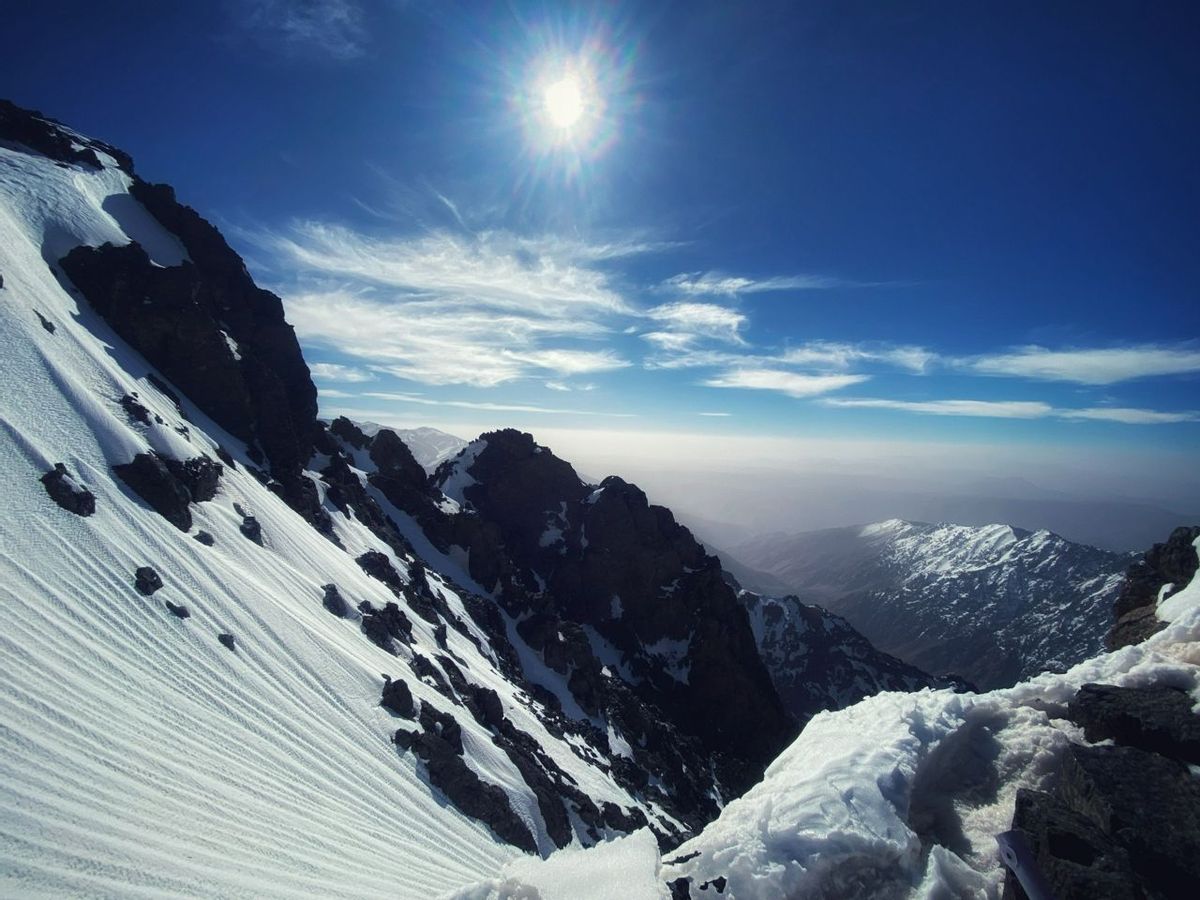
Summit Mount Toubkal (4,167m), the highest peak in North Africa, after a gradual and scenic build-up.
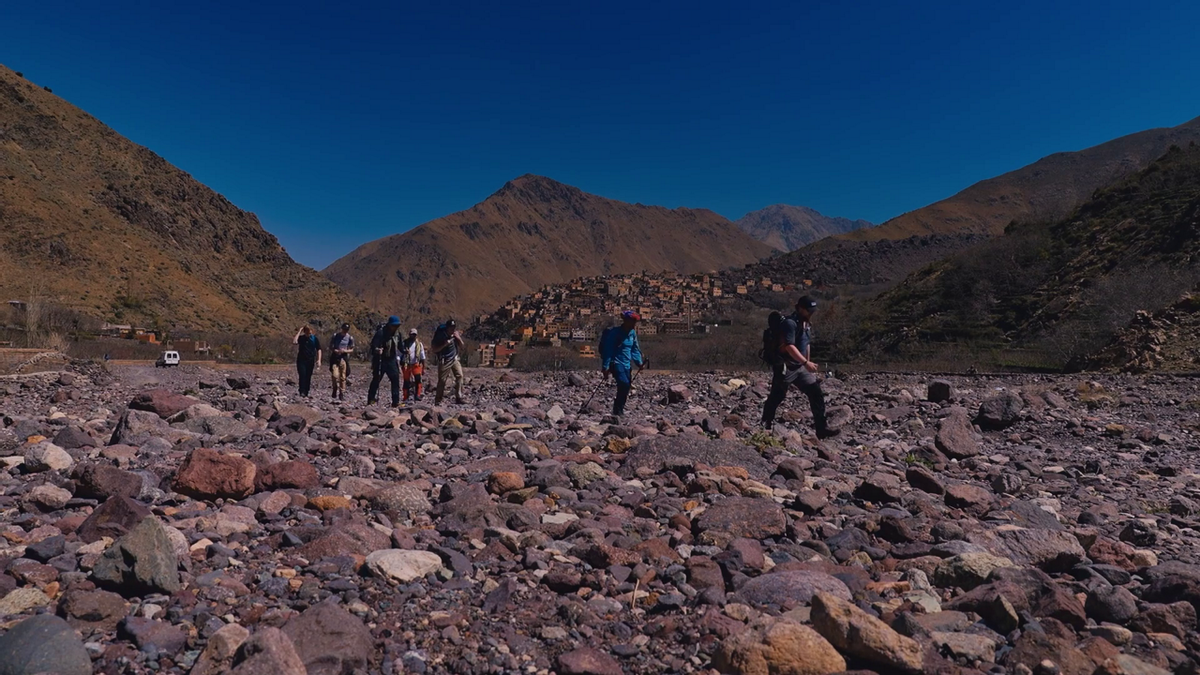
Explore remote Berber villages and experience life in the High Atlas far from the tourist trail.
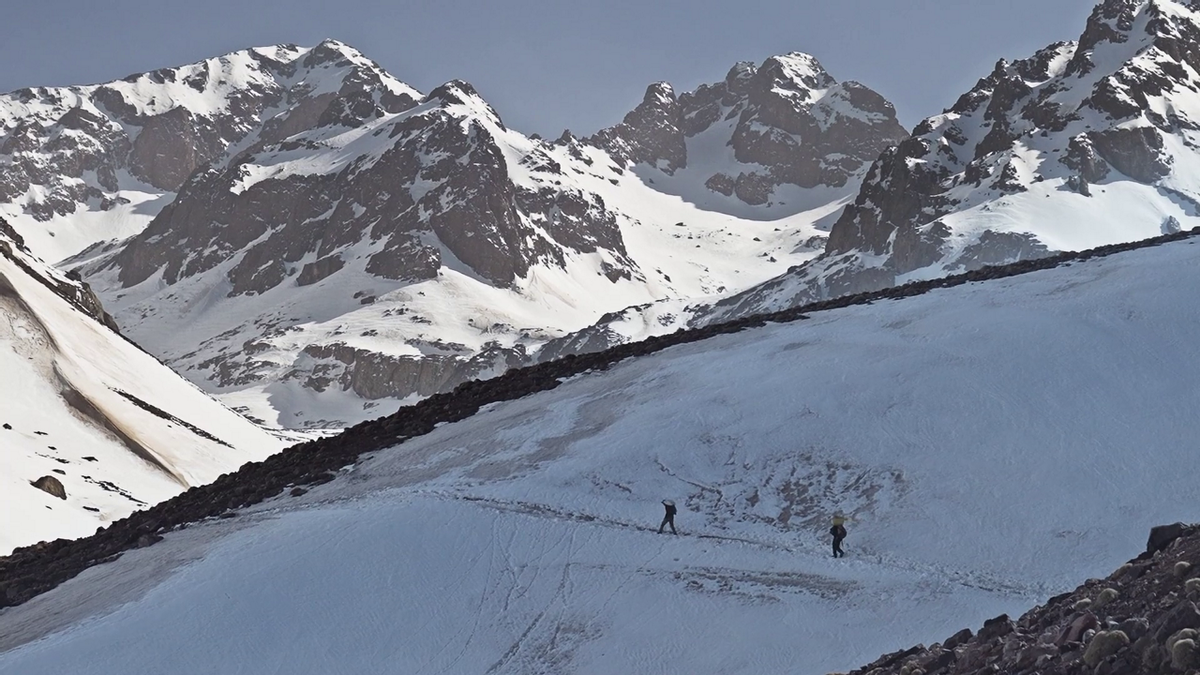
Trek through dramatic landscapes - from lush valleys to rocky passes and windswept ridgelines.
Enjoy real acclimatisation time with side hikes and longer days on the trail.
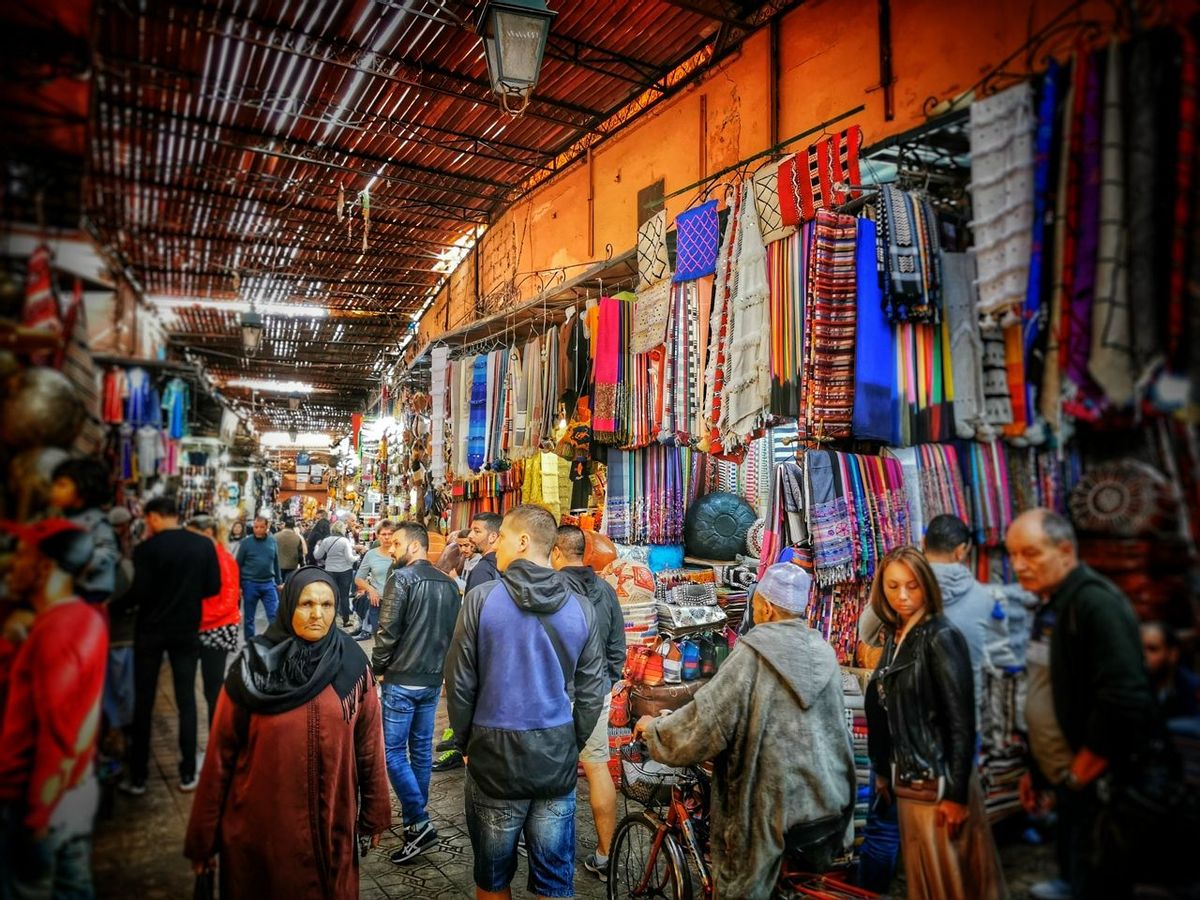
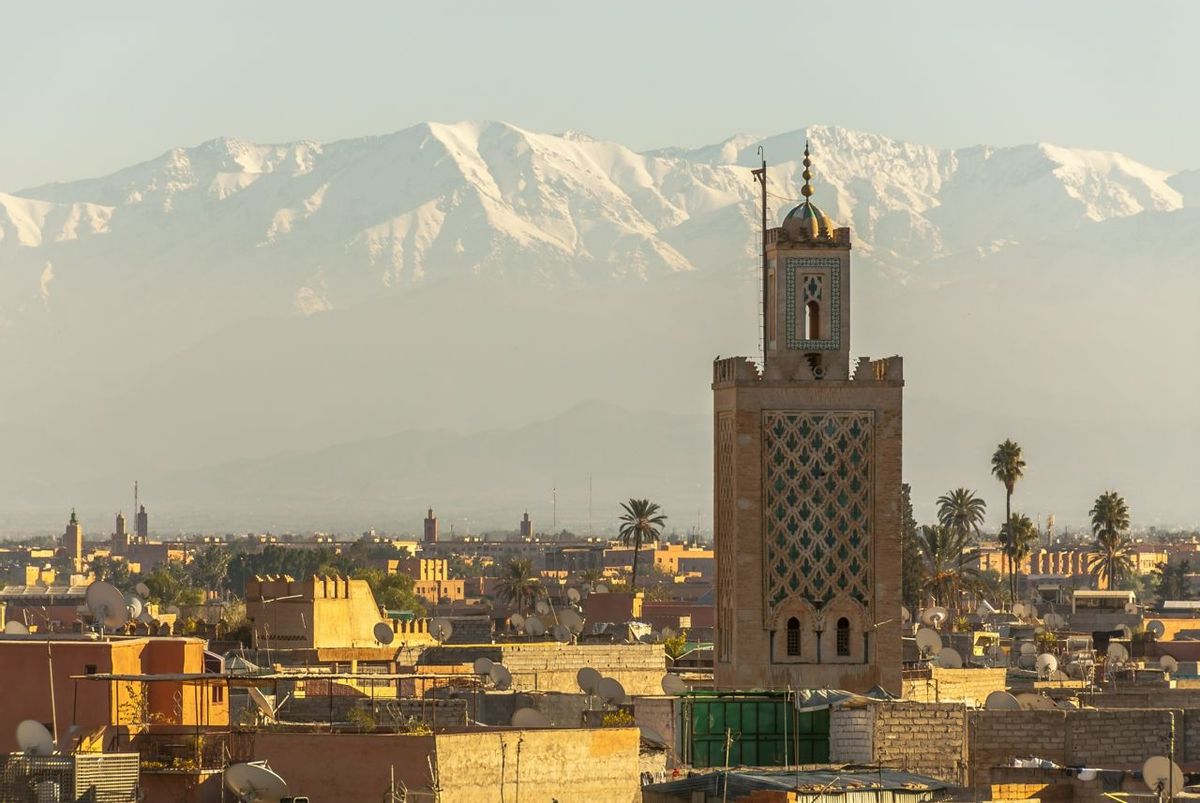
Start and end in Marrakech, with time to dive into the souks, spices, and street food of the Red City.
8-Day Mt Toubkal Roof of the North 8 Day Trek Itinerary
Welcome to Morocco — let your Mount Toubkal adventure begin!
You should book your international flights to arrive at Marrakech Menara Airport in Marrakech on Day 1 of your itinerary. This allows time to settle into the city, before transferring to the Atlas Mountains the following day.
As soon as you arrive in Marrakech, your EverTrek adventure begins! A friendly member of our team will be there to greet you and drive you to Riad in the bustling center of Marrakech, where you can settle into life in Morocco and head to the Souks for some early bartering!
In the evening, you will be taken to a local restaurant for a welcome meal, where you can get to know your fellow trekkers ahead of going up into the mountains.
Our trek to Mount Toubkal starts.
Today you’ll rise early and, after a hearty breakfast, complete the final preparations for your adventure. Then it’s time to hit the road, travelling through the rolling foothills of the Atlas Mountains.
The scenic drive takes you through the beautiful Mizane Valley to Imlil, your first trekking destination and the heart of the High Atlas. Along the way, the dramatic peaks begin to reveal themselves, and on a clear day, you may even catch your first glimpse of Mount Toubkal, your ultimate goal.
Imlil, with its stunning trails and traditional Berber charm, was chosen by Hollywood as a filming location for the movie Kundun. It’s the perfect place to settle in, stretch your legs, and take a gentle walk in the afternoon to begin the acclimatisation process.
Today is all about acclimatising and enjoying the stunning surroundings of the Imlil Valley.
Your guide will lead you along traditional Berber trails, giving you the chance to experience the rich history and culture of the local villages and their welcoming communities. If the weather is on our side, you may even have the opportunity to summit one of the smaller nearby peaks in the Atlas Mountains, reaching heights of up to 2,500 metres. From here, you’ll be treated to breathtaking panoramic views across the valley, a perfect taste of what’s to come when you get to the Mount Toubkal summit.
This day not only helps your body adjust to the altitude, but also gives you a chance to familiarise yourself with the terrain you’ll be tackling in the days ahead.
You’ll return to Imlil in the afternoon for a well-earned meal and some rest, allowing your body to continue adapting as you prepare for the next stage of your adventure.
Today marks the start of your ascent towards Mount Toubkal as you trek through the stunning Mizane Valley.
We’ll be heading towards the sacred shrine of Sidi Chamarouch, which sits at 2,310 metres.
Nestled beneath dramatic mountain slopes, this spiritual site, nestled beneath dramatic mountain slopes, is a place of pilgrimage for many Moroccans. You’ll have some time here to rest, take in the atmosphere, and refuel before continuing your journey upward.
From here, the trail gradually gains altitude as you make your way towards the Toubkal Refuge at 3,207 metres, your base for the night and the final stop before summit day. On arrival, your guide will brief you on the next day’s Mount Toubkal summit attempt, ensuring you’re fully prepared for what lies ahead. The rest of the evening is yours to rest, adjust to the altitude, and enjoy a well-earned meal.
Be sure to get an early night, tomorrow you’ll be aiming for the highest point in North Africa!
The day you have all been waiting for — there is nothing quite like waking up on summit day!
You’ll wake before dawn and leave the refuge under the cover of darkness, your head torch lighting the path ahead as you begin your ascent.
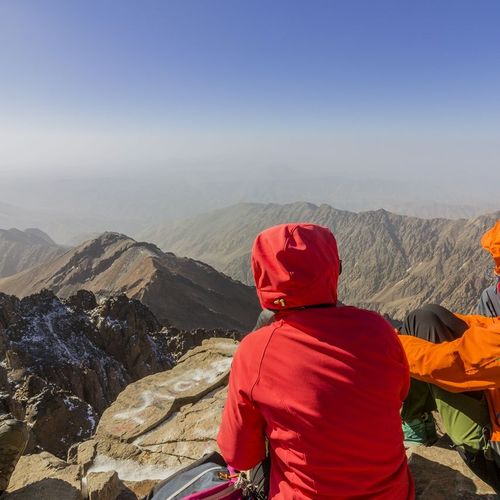
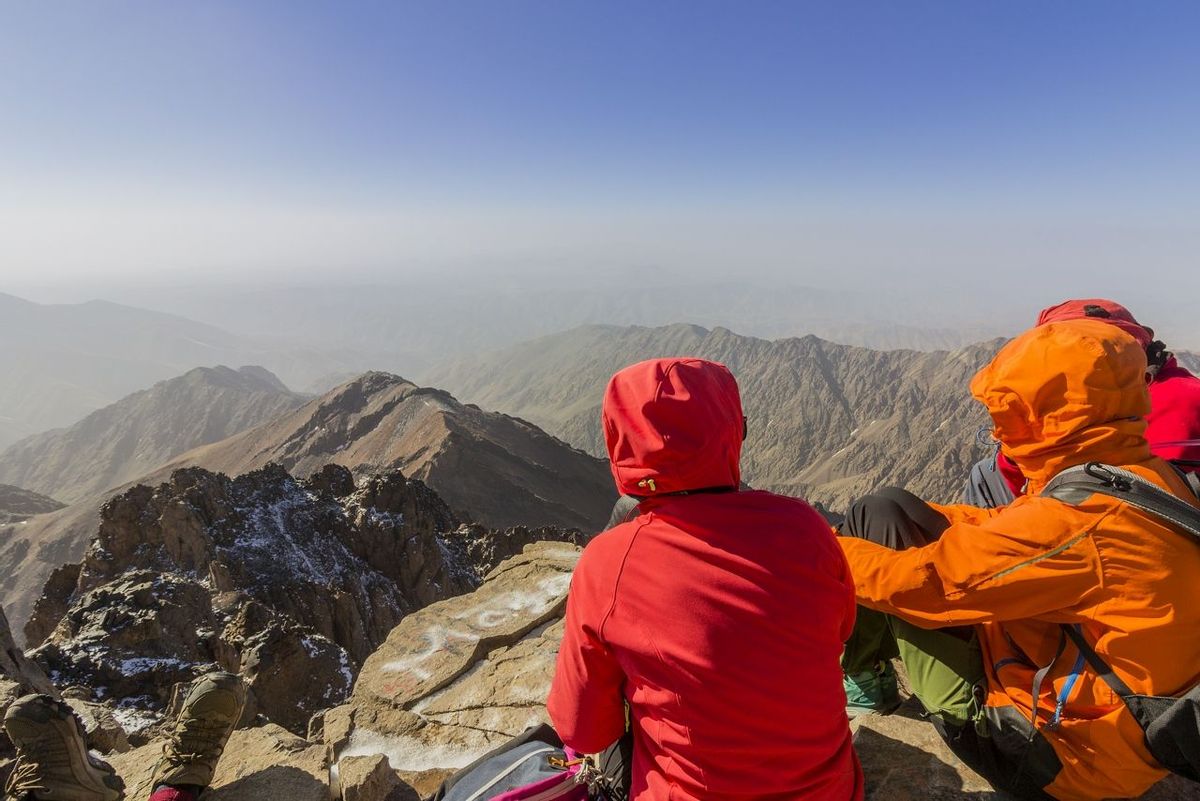
The trail rises steeply from the outset, climbing a scree slope where the thin mountain air adds to the challenge, but every step is a step closer to the summit. After a steady push, you’ll reach a wide mountain pass offering incredible early morning views and a brief chance to rest. From here, the route turns towards the summit ridge for the final climb. As you ascend and step onto the summit plateau at 4,167 metres, you’ll be rewarded with an overwhelming sense of achievement.You’ve reached the highest point in North Africa.
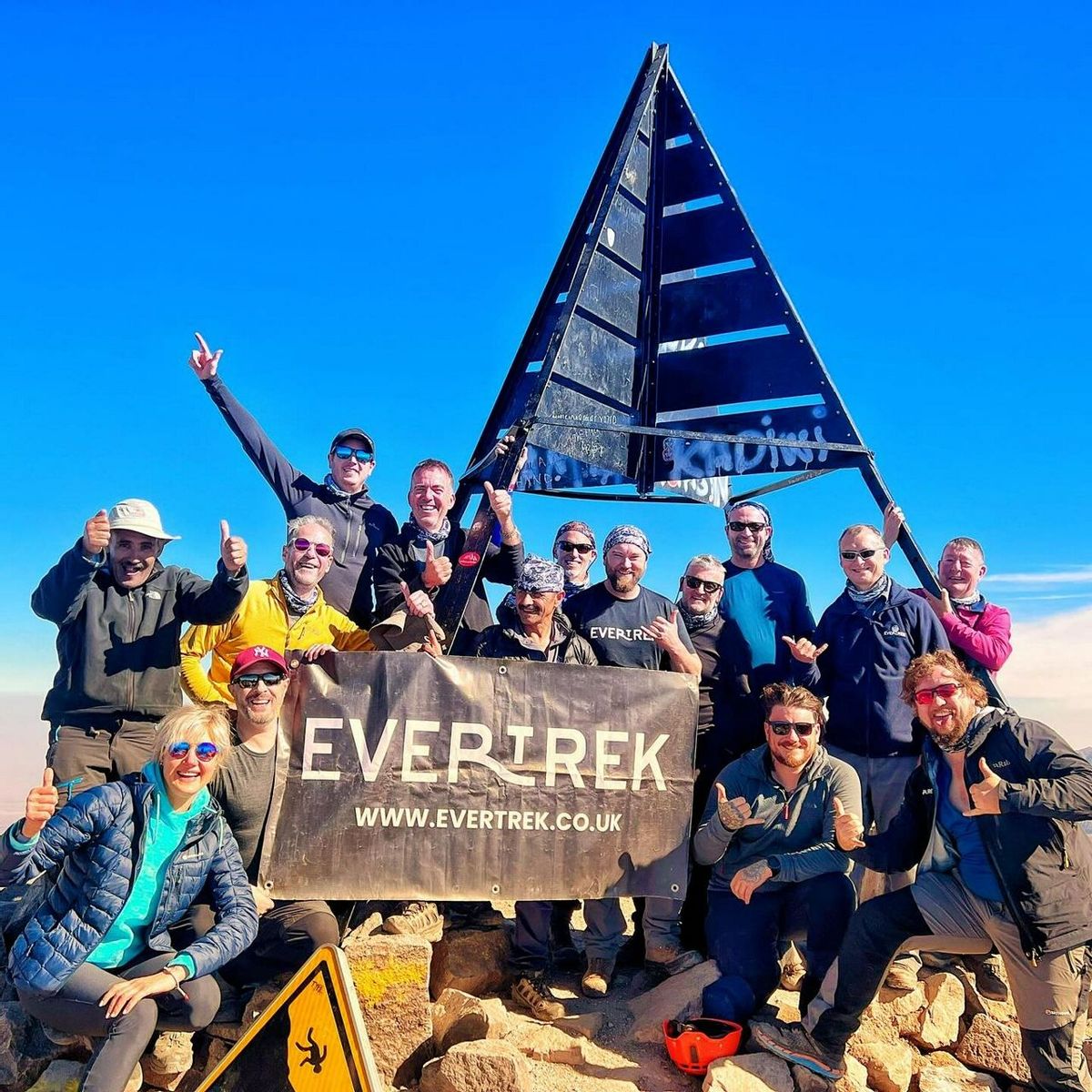
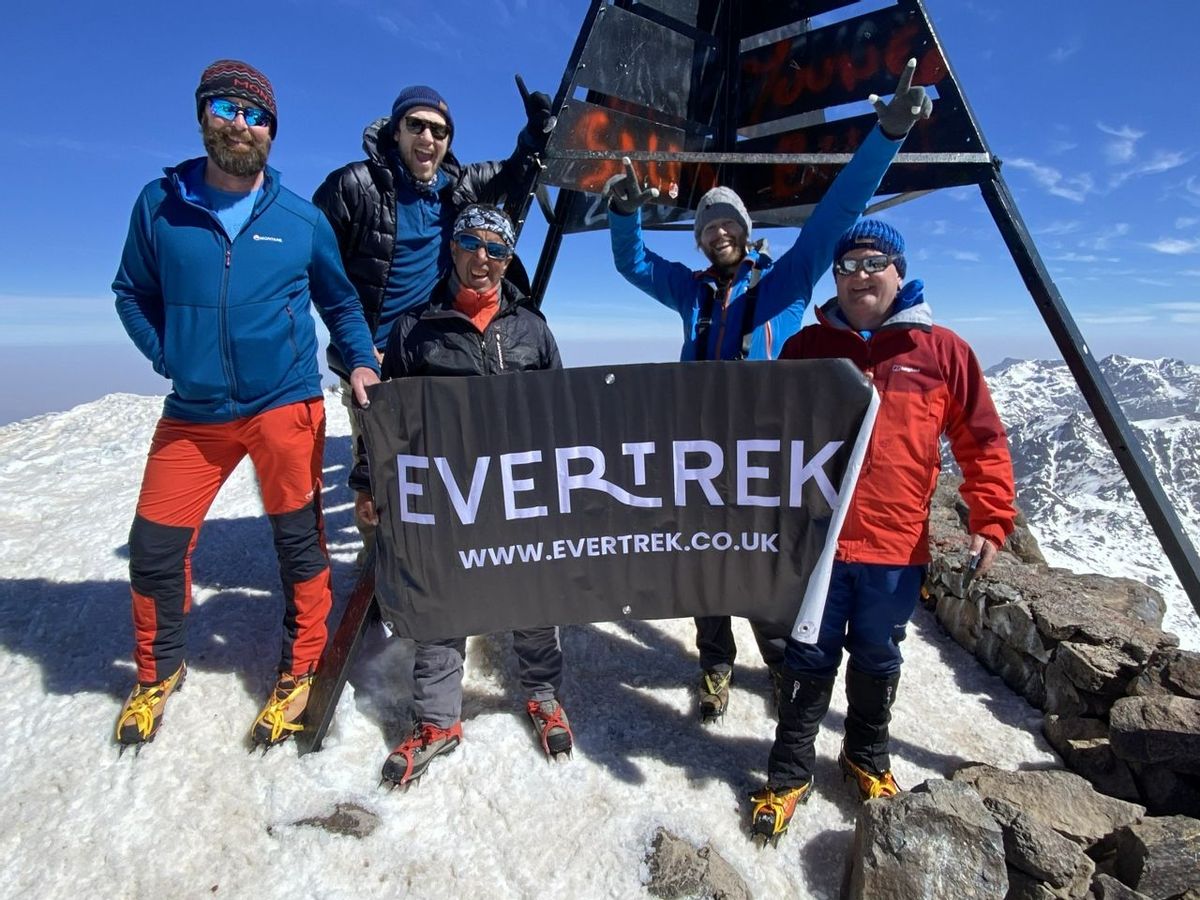
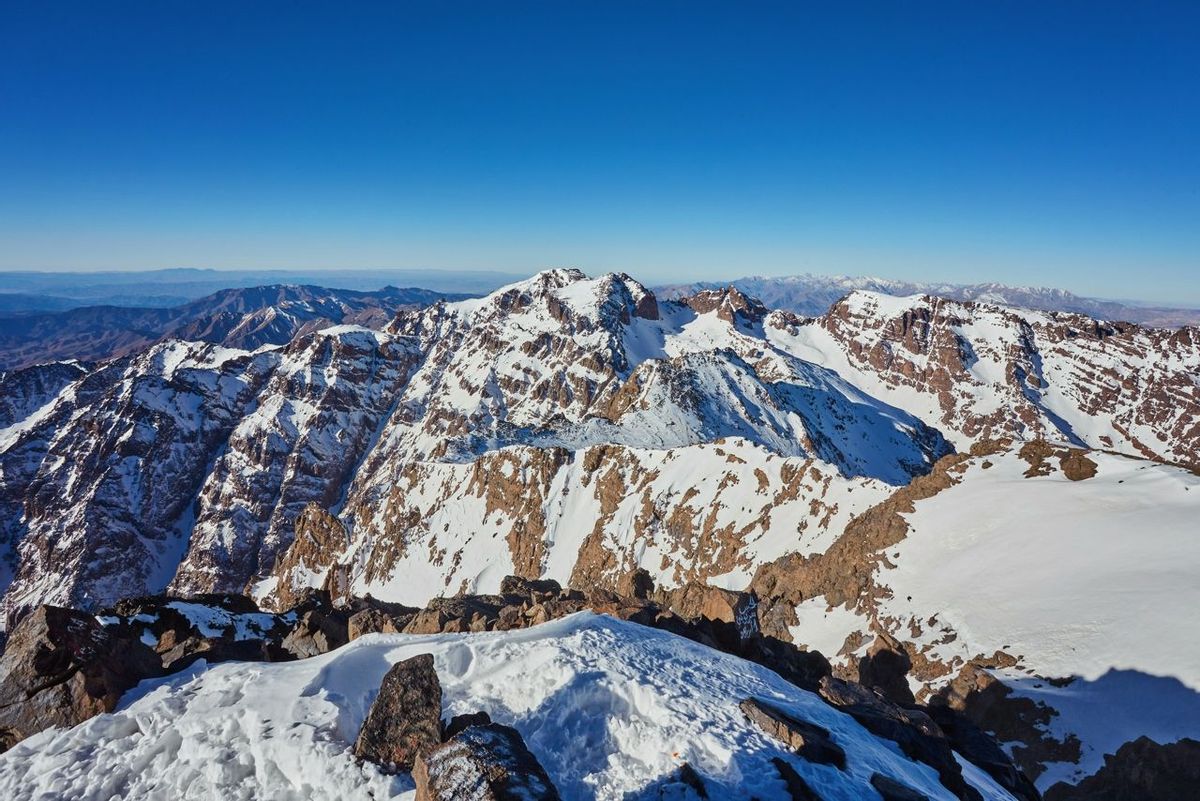
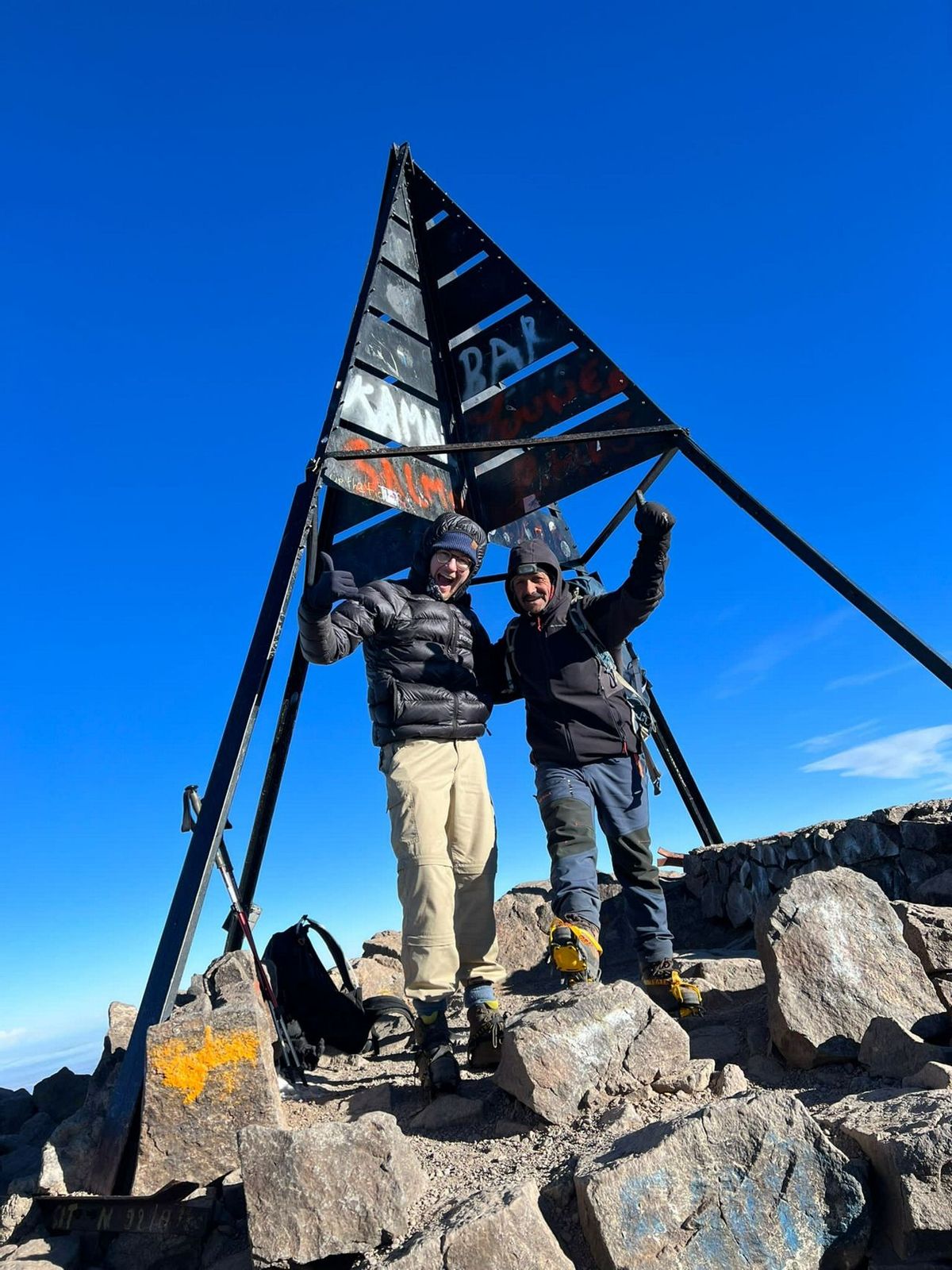
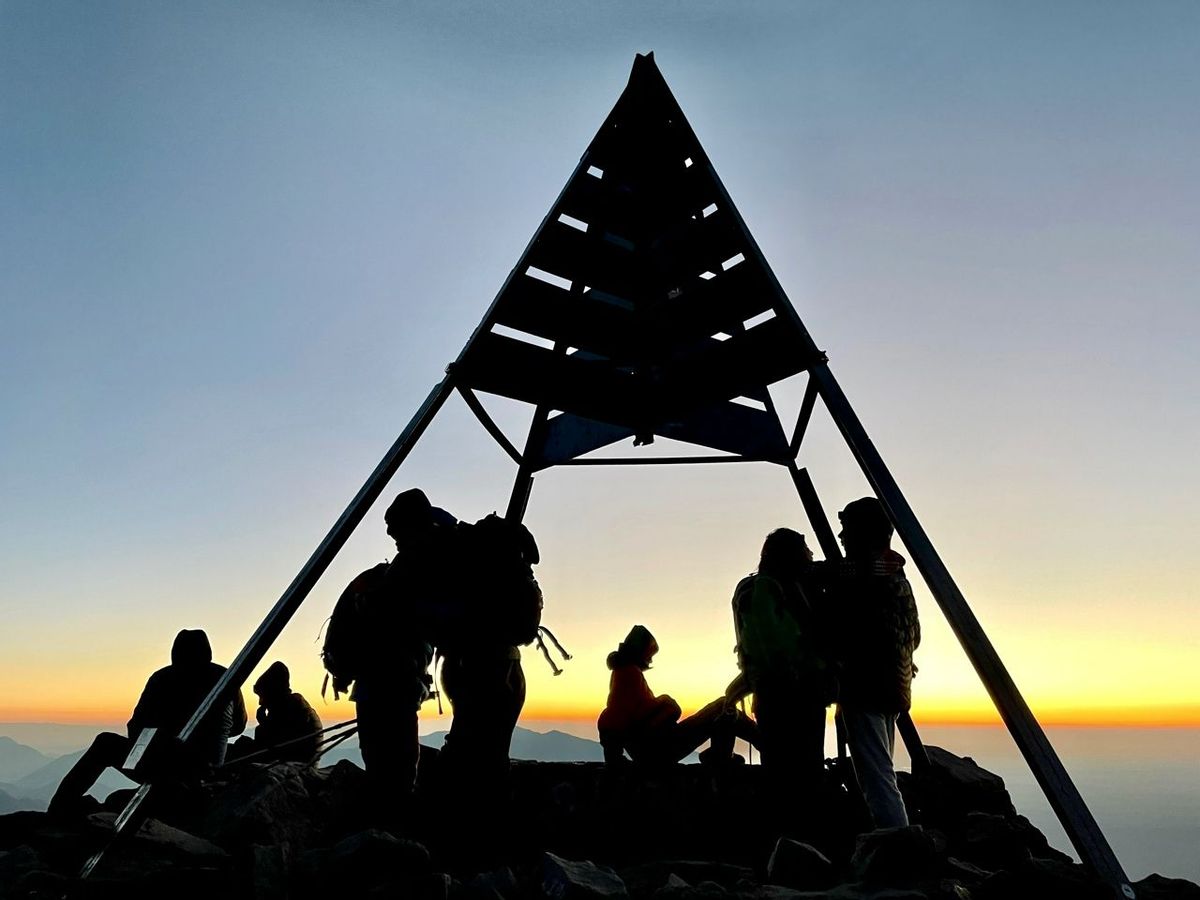
The Mount Toubkal summit is marked by a distinctive metal tetrapod, making it a perfect spot for a celebratory photo. On a clear day, the views are breathtaking, stretching all the way back to Marrakech, a powerful reminder of how far you’ve come, both physically and mentally. The descent follows the same route, where you'll tread carefully back down to the Toubkal Refuge.
With the summit behind you and the challenge conquered, it’s mission accomplished!
Today you have a choice to make: enjoy a restful morning at the refuge, or take on another exciting challenge with the option to summit Mt Ouanoukrim, North Africa’s second-highest peak…
After an early breakfast, those joining the summit team will begin the climb, first heading up to Tizi n’Ouagane at 3,750 metres. After a short break to catch your breath and take in the views, the route continues towards the summit.
This ascent includes a section of hands-on scrambling over loose rock. There’s nothing too technical, and your experienced guide will be with you every step of the way to ensure a safe and steady climb. Once past this section, you’ll encounter the always-entertaining false summit, before crossing a rocky ridge to reach the true summit of Mount Ouanoukrim at 4,089 metres. After taking time to celebrate your achievement and soak in the panoramic views, you’ll retrace your steps back to the refuge.
Those who opted not to summit will be waiting at the refuge, where you'll all enjoy a final evening together in the heart of the High Atlas, reflecting on an unforgettable adventure.
Your final day in the Atlas Mountains begins with a gentle, steady descent back down to Imlil.
As you make your way through the trails, take in the breathtaking views of Mount Toubkal and the Atlas Mountains one last time and reflect on the incredible journey you’ve just completed. On arrival in Imlil, you’ll say farewell to the amazing guides and porters who supported you throughout your ascent, a moment to share your gratitude and celebrate the team effort.
From here, you’ll travel back to Marrakech, arriving in the late afternoon. With a bit of extra time on your hands, you’ll be free to explore the city with fresh eyes, shaped by your mountain adventure.
In the evening, you are free to head out and find a restaurant for dinner, or simply relax in the Riad if you prefer.
Your time in Morocco has come to an end, and your transfer will be waiting to take you to the airport for your journey home.
Depending on your flight time, you may have a final opportunity to soak up the sights, sounds, and vibrant colours of Marrakech, a last taste of the magic that makes this city so unforgettable.
As you head home, take a moment to reflect on your incredible journey and the unforgettable achievement of standing on the summit of Mount Toubkal, ‘the Roof of the North’. You've experienced something truly special, a story that will stay with you for years to come.
8-Day Mount Toubkal Trek Dates & Prices
Saturday 15th August 2026 –
Saturday 22nd August 2026
$950pp
Friday 26th March 2027 –
Friday 02nd April 2027
$1,100pp
OR $180 / 5 months
Saturday 15th May 2027 –
Saturday 22nd May 2027
$1,100pp
OR $129 / 7 months
Saturday 12th June 2027 –
Saturday 19th June 2027
$1,100pp
OR $113 / 8 months
Saturday 10th July 2027 –
Saturday 17th July 2027
$1,100pp
OR $100 / 9 months
Saturday 18th September 2027 –
Saturday 25th September 2027
$1,100pp
OR $82 / 11 months
Saturday 13th November 2027 –
Saturday 20th November 2027
$1,100pp
OR $70 / 13 months
Saturday 11th March 2028 –
Saturday 18th March 2028
$1,150pp
OR $56 / 17 months
Saturday 13th May 2028 –
Saturday 20th May 2028
$1,150pp
OR $53 / 18 months
Saturday 10th June 2028 –
Saturday 17th June 2028
$1,150pp
OR $53 / 18 months
Saturday 08th July 2028 –
Saturday 15th July 2028
$1,150pp
OR $53 / 18 months
Saturday 16th September 2028 –
Saturday 23rd September 2028
$1,150pp
OR $53 / 18 months
Saturday 11th November 2028 –
Saturday 18th November 2028
$1,150pp
OR $53 / 18 months
Food & Accommodation on the 8-Day Mount Toubkal Trek
When you’re trekking towards the highest peak in North Africa, you need great food and a good night’s sleep to keep you powering forward. During your time in Morocco, you’ll experience a fantastic mix of hearty meals, authentic Berber hospitality, and scenic, rustic accommodation.
Your Accommodation Overview
- 3* hotel before & after
- 3 meals daily on trek
- Bottled mineral water provided
- Mixture of traditional riads and mountain refuge
Accommodation Throughout Your Mount Toubkal Hike
You’ll stay in a combination of comfortable Riads, traditional Berber lodges, and mountain refuges or tents depending on the season you trek.
| Nights | Location | Type | Room Type |
|---|---|---|---|
| 1 | Marrakech | Traditional Riad | Twin-share, En-Suite |
| 2 & 3 | Imlil | Berber Lodge | Twin or triple share, En-Suite |
| 4-6 | Mountain Refuge | Dormitory-style (Winter) or tents (Summer) | Bunk beds (Winter) or twin-share (Summer) |
| 7 | Marrakech | Traditional Riad | Twin-share, En-Suite |
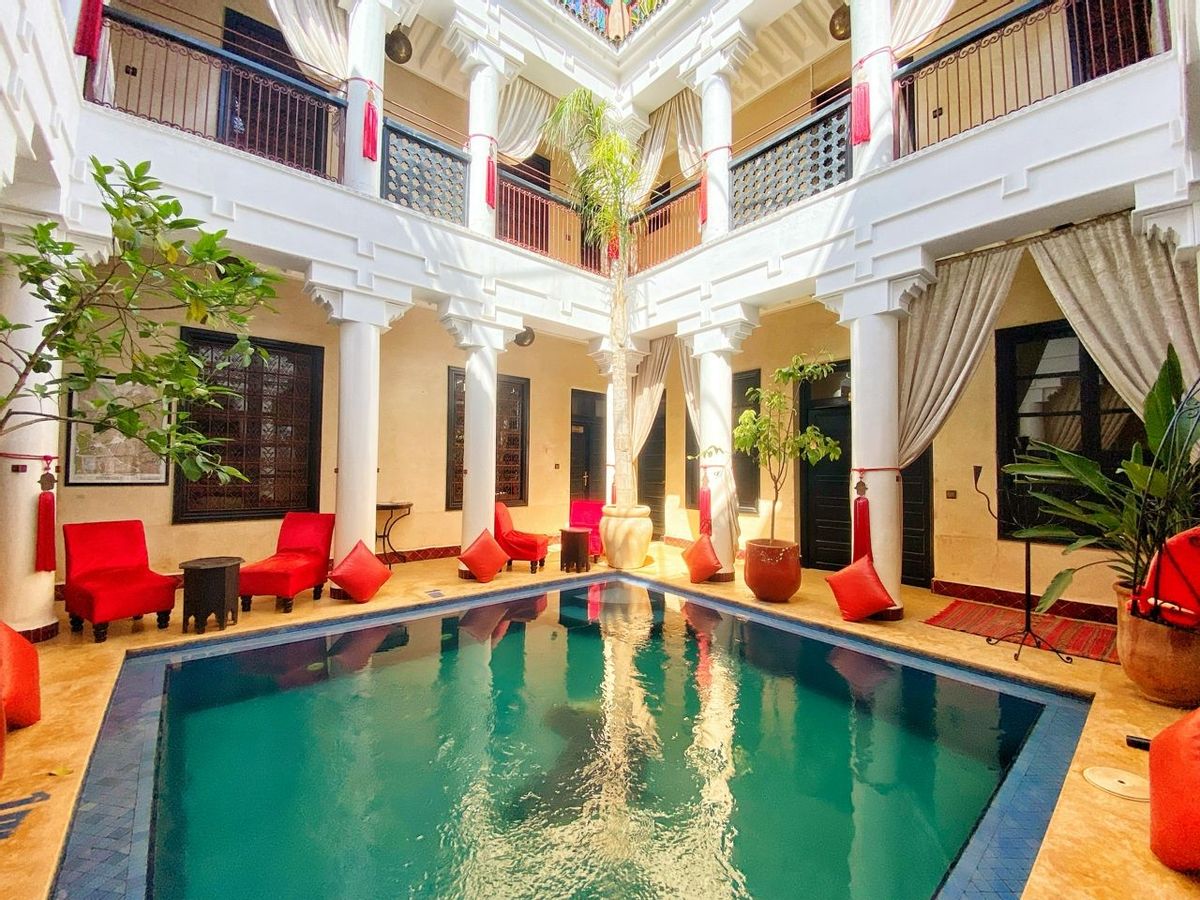
At the start and end of your trip, you’ll stay in a comfortable Riad in the city centre, perfect for relaxing or exploring the bustling souks. The exact Riad will vary, depending on the group size and availability, but we ensure that they are of the same standard.
Riads we often use are Riad Africa, Riad Explore and Riad Bahia Salem.
After leaving the hustle and bustle of Marrakech, you’ll stay at a traditional Berber lodge in Imlil to begin acclimatising, offering twin-share rooms with en-suite facilities, hot showers, and cosy communal areas. We usually use Imlil Lodge for this, located at the top of the village.
During our Winter season treks (November - April), you’ll stay inside the Toubkal Refuge. This shared mountain hut is warm and communal, offering dormitory-style accommodation with bunk beds. It’s a sociable atmosphere where you can swap stories with fellow trekkers while keeping warm by the wood stove.
During our Summer season treks (May - October), you'll camp outside the Toubkal Refuge. We provide high-quality tents, sleeping mats, and camping equipment, which are set up for you by the crew. You’ll camp under the stars in a stunning high-altitude setting, a real wilderness experience. A private toilet tent will be set up for use during the night, with the refuge facilities being available for use during the day.
The mountain refuge has basic facilities, but not what lots of trekkers are used to. Use this as an opportunity to embrace being deep in the Atlas mountains!
A good sleeping bag/liner, earplugs, inflatable camping pillow and a power bank can make your stay more comfortable for the night.
The simplicity of the accommodation before summit night is part of the charm of trekking in such a remote and beautiful region, before getting back for one final night in Marrakech.
Food on Your Mount Toubkal Adventure
Throughout the adventure, meals are freshly prepared to keep your energy high and your spirits even higher. While in Marrakech and Imlil, you’ll enjoy breakfasts and evening meals at the hotel or local lodges, giving you a chance to sample classic Moroccan dishes like tagine, couscous, and harira soup. Think big flavours, warm spices, and plenty of hearty ingredients to keep you trekking strong. Once you’re up on the mountain, meals are provided at the Toubkal Refuge or at camp, prepared by our fantastic mountain chefs. You’ll be well-fueled each day with nutritious, fresh dishes tailored to keep you going in the high-altitude environment.
| Days | Breakfast | Lunch | Dinner |
|---|---|---|---|
| 1: Marrakech (Arrival Day) | |||
| 2-3: Imlil | |||
| 4-6: Trekking Route | |||
| 7: Trekking Route/Marrakech | |||
| 8: Marrakech (Departure Day) |

Please ensure you bring a reusable water bottle or hydration bladder with you to transfer the water into, to ensure that the plastic bottles are disposed of correctly, so as not to litter the upper mountain regions. Having a water bottle and a hydration bladder will also make drinking on the trek much easier. You can practice with both during your training hikes to make sure you have the best equipment that works for you.
Filter Water Wherever You Go
For extra peace of mind on your adventure, our branded Water-to-Go bottles filter up to 99.9999% of contaminants from non-saltwater sources while helping reduce single-use plastic.Use code evertrek20 to receive 20% discount at checkout.
Purchase your EverTrek Water-to-Go bottle here.
Difficulty:
Moderate
How challenging is the trek?
The Toubkal 8-Day Trek offers more than just a quick summit. It’s a well-paced adventure through Morocco’s High Atlas Mountains, taking in remote valleys, traditional Berber villages, and high passes before the final push up Mount Toubkal (4,167m), the highest peak in North Africa.
The summit is non-technical, but don’t underestimate the challenge. With rocky trails, big elevation gains, and the effects of altitude, this trek demands a good level of fitness and strong legs, especially for summit day.
The beauty of the 8-day itinerary is that it gives you plenty of time to acclimatise, build your rhythm, and enjoy the cultural side of the trail and is overall less intense than the short weekender trip.
Pre-Trek Fitness Prep
Before taking on Toubkal, you should aim to:
- Hike for 5 to 7 hours a day, carrying a 6 to 8kg daypack
- Climb 800 to 1,000m in a day, with rough, uneven ground
- Be comfortable trekking on consecutive days
- Include hill walking, stairs, or elevation hikes in your training
If you’re looking for a manageable but still challenging summit goal, Toubkal is ideal. It’s achievable for fit beginners, and a great warm-up for higher-altitude expeditions.
What to expect on the trek
Altitude Challenges
Mount Toubkal stands at a maximum height of 4,167m, so while it's not extreme, the altitude is still noticeable, especially on summit day.
The 8-day itinerary gives you time to acclimatise gradually, reducing the risk of altitude sickness and giving you a much better shot at enjoying the summit push.
You’ll cross several high passes over 3,000m, and spend at least one night at Toubkal Refuge, where you’ll launch your early morning summit attempt.
Duration
This is a full 8-day experience, including:
- Time exploring Marrakech
- Several trekking days through the Imlil Valley, Azzaden Valley, and surrounding Berber villages
- A Mount Toubkal summit day from the refuge, which typically starts before dawn
Expect to walk 5 to 7 hours most days, with summit day being the longest around 9 to 10 hours of up and down, depending on pace and weather.
Terrain
The terrain is classic High Atlas: rugged, rocky, and steep in parts. Expect:
- Mountain switchbacks, mule tracks, and loose scree
- A mix of well-worn trails and uneven, rocky sections
- No technical climbing, but the summit push involves a steep ascent and descent over scree
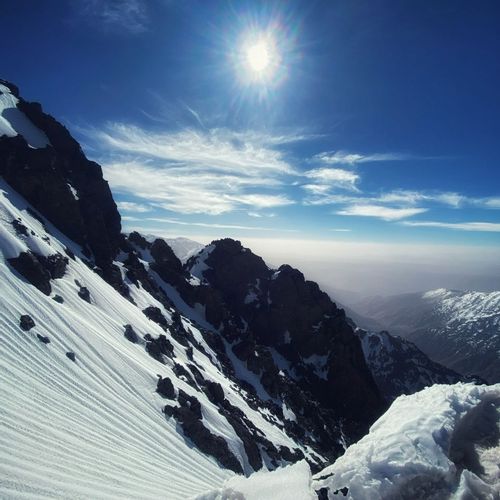
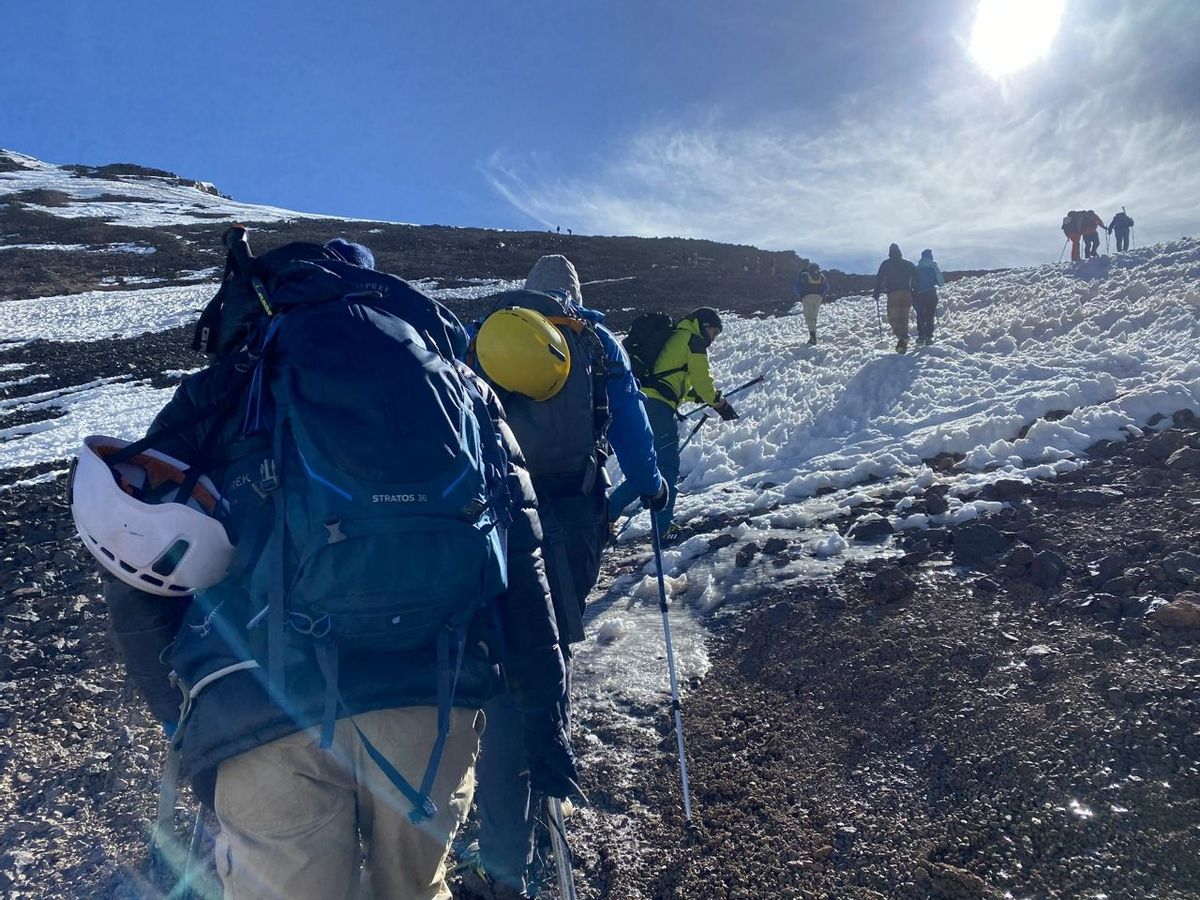
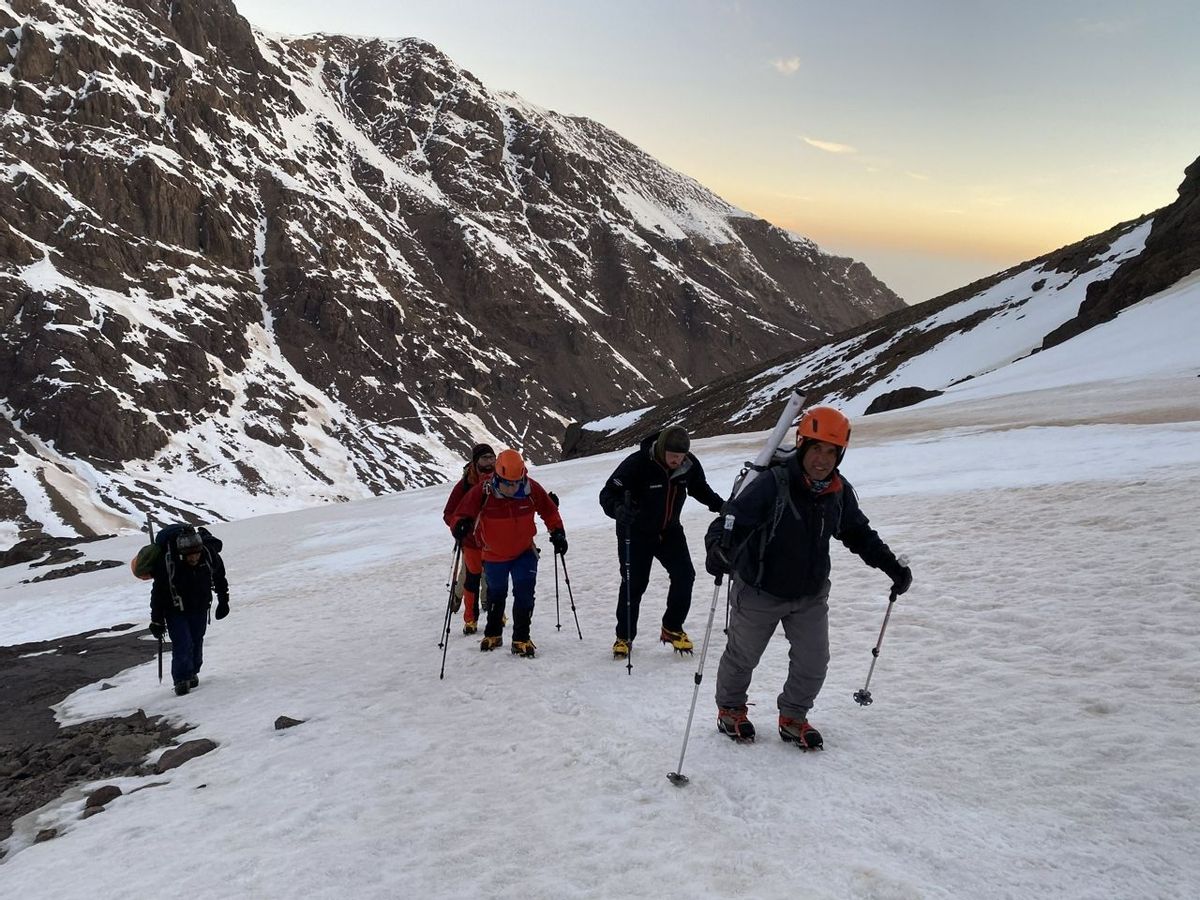
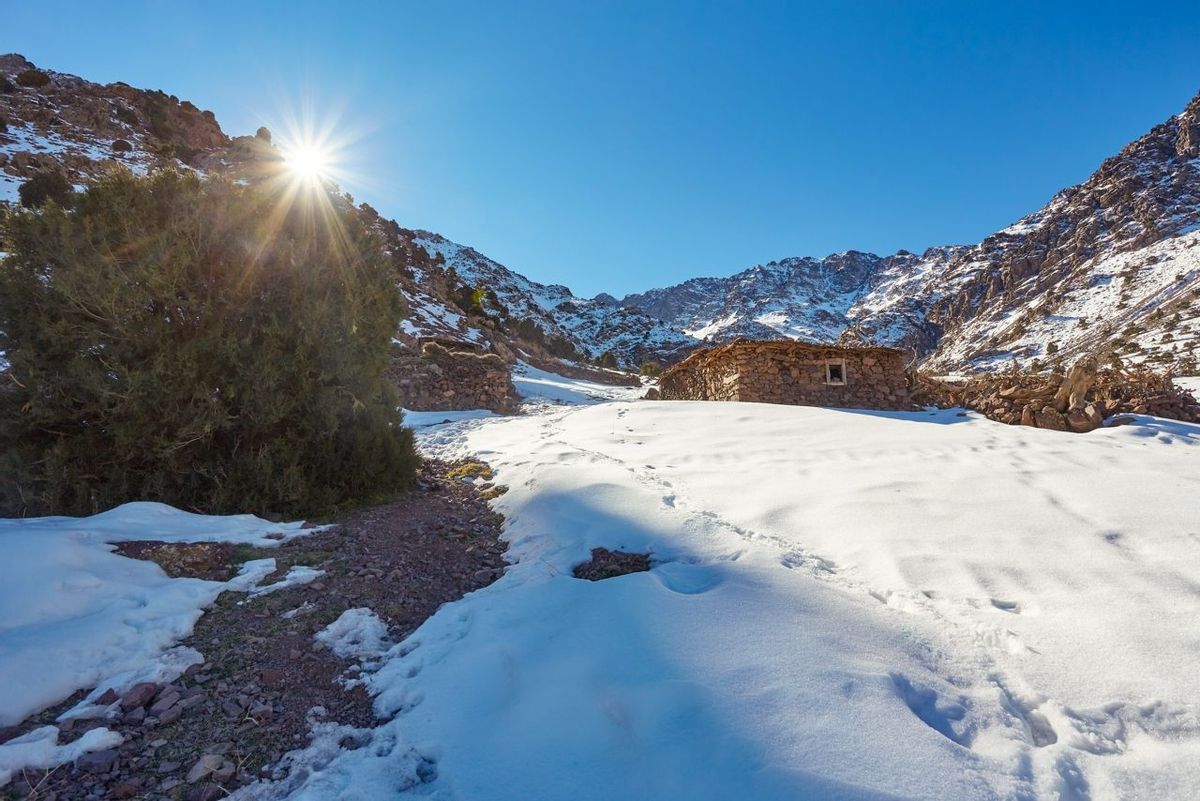
During winter or early spring, snow may cover parts of the summit trail, in which case you may need crampons and an ice axe (provided by your guides who will demonstrate how to use them safely).
Weather
Conditions in the Atlas Mountains vary by season:
- Spring and autumn offer cool, clear conditions ideal for trekking
- Summer can be hot in the lower valleys but more manageable at altitude
- Winter brings snow, especially above 3,000m
Even in warmer months, mornings and evenings can be chilly, especially at the refuge. Layering is key, and a good-quality down jacket is recommended.
Is the 8-Day Mount Toubkal Hike the Right Adventure for You?
The Mount Toubkal 8-Day Trek is the perfect trip if you’re after a challenging summit without the long-haul flight, want time to explore the High Atlas more deeply, and still want to bag a major peak. It’s physically demanding but very achievable, and ideal for anyone looking to prep for bigger mountains or squeeze in a big adventure in just over a week.
Essential Kit for Your 8-Day Mount Toubkal Trek
Explore our essential kit picks so you're comfortable, safe, and ready for every step. Download the full checklist to nail your packing.
Waterproof jacket
A versatile gore-tex or similar material jacket is ideal for year round walking, hiking and trekking in the roughest weather. Jackets like the Latok Mountain GORE-TEX® Pro Jacket offer great weather protection and breathability when you need it.
Insulated jacket
A down or synthetic insulated jacket is a must for sub-zero conditions. Jackets like the Montane Anti-Freeze XT Down Hoodie use water-resistant down for an excellent warmth-to-weight ratio, with features like high collars and storm flaps to trap heat.
Sleeping bag
A warm and reliable down-filled sleeping bag is essential for multi-day trekking or backpacking adventures. The Rab Ascent 700 is a great example, made with recycled materials and designed for both regular camping and mountain use.
Base layer top
A warm and breathable long-sleeve base layer, combining materials like Merino wool and synthetic fibres, helps regulate body temperature in various outdoor conditions. The Helly Hansen Lifa Merino Midweight is one such example.
Trekking shorts
Lightweight and durable walking shorts are ideal for fast-paced mountain hikes. Shorts like Montane's Tenacity Lite use stretch fabrics to offer protection from wind and abrasion.
Trekking trousers
Tough, lightweight and versatile trousers are perfect for a range of outdoor activities. The Montane Terra Pants continue to be a go-to choice for everything from trekking to scrambling.
Trekking poles
Lightweight yet sturdy walking poles help with balance and reduce strain on steep or uneven terrain. The Leki Khumbu Lite poles are a popular option for hill walking and mountain hiking.
Mountain sunglasses
Protective and high-performance sunglasses are important for alpine environments. Sunglasses like the Julbo Shield Reactiv combine style with serious high-mountain protection.
Leggings
Lightweight leggings with moisture-wicking fabrics are ideal for active use. The North Face Flex High Rise Leggings offer comfort and sweat management during exercise.
Technical T-shirt
A moisture-wicking technical tee is essential for active days in the hills. The Rab Force T-Shirt is a reliable choice for mountain walkers and runners alike.
Hiking boots
Supportive and grippy walking boots are key for long hikes and rugged trails. The Salomon Quest 4 GTX boots are built for demanding conditions and multi-day use.
Hiking socks
A good pair of merino-blend walking socks helps keep feet warm and comfortable on long walks. The Bridgedale Merino Hiker socks are a dependable option for various terrains.
Daypack
A 30-35L daypack is a great size for longer hikes or overnight trips. Packs like the Osprey Talon 33 balance load well and offer good back ventilation.
Fleece mid layer
A soft, insulating fleece is great for layering on cooler days. The North Face Cornice II is a sustainable option made from recycled materials.
Warm beanie
A warm and comfortable beanie is ideal for cold weather walks or everyday use. The Mountain Equipment Humbolt Beanie fits the bill.
Hydration reservoir
A 2-3L hydration bladder helps you stay hydrated on the move. The Osprey Hydraulics 3L Reservoir is stable, easy to use, and reliable.
Water bottle
A durable, wide-mouth bottle is handy for refilling on the go. Nalgene's Sustain 1L Water Bottle is a classic, perfect for day hikes or longer trips.
Waterproof gloves
Warm, waterproof gloves are essential for wet and cold mountain days. Gloves like the Montane Respond Dry Line offer protection and dexterity in tough conditions.
Headtorch
A compact and bright headtorch is important for early starts or late finishes. The Petzl Tikka 350L is simple to use and effective for low-light navigation.
Sleeping mat
A lightweight and compact sleeping mat adds essential insulation and comfort for overnight stays outdoors. Mats like the Therm-a-Rest NeoAir XLite NXT offer excellent warmth-to-weight performance, making them a solid choice for backpacking and wild camping.
Portable power bank
A high-capacity power bank is a great way to keep your devices charged on multi-day trips or when you're off the grid. Options like the Anker PowerCore 20000mAh offer multiple charges for phones and other electronics, making them ideal for camping, backpacking, or travel.
Explore our essential kit picks so you're comfortable, safe, and ready for every step. Download the full checklist to nail your packing.
FAQs
Mount Toubkal is the highest peak in the Atlas Mountains in south west Morocco. This mountain range is around 60–63km south of Marakkech.
The summit of Mount Toubkal stands at 4,167 metres (13,670 feet).
To join the EverTrek Team on The Mount Toubkal 8-day trek, prices start from £895, depending on your chosen departure year. This includes all accommodation, meals during the trek, internal transfers, the services of experienced local guides, and full support from our team.
Please bear in mind that International flights to Marrakech, travel insurance, tips, and some meals in Marrakech are not included. For more information on booking flights for your EverTrek trip, take a look at our guide.
The actual climb to the summit of Mount Toubkal can be done in as little as two days. Our 8-day trek provides time for acclimatisation to reduce altitude sickness and the chance to explore the local areas. It also includes an optional summit to the second-highest peak in the Atlas Mountains, Mount Ouanoukrim.
If you’re looking for a shorter trip that still packs plenty of adventure in, check out our Mount Toubkal Weekender, a 4-day hike in the Atlas Mountains.
EverTrek uses the classic route from Imlil through the High Atlas Mountains, staying overnight at the Toubkal Refuge before the summit push. This well-established route offers incredible views across North Africa and a challenging but achievable ascent. The trek takes you through traditional Berber villages and allows time to explore the incredible culture and rugged landscapes of Morocco.
We’ve rated our 8-day Mount Toubkal hike ‘moderate’. It’s a challenging adventure but it’s well paced with plenty of acclimatisation. There’s no technical climbing but you’ll need a good level of fitness and motivation for the push to the top of Mount Toubkal on summit day.
Our Trek Prep Hub has lots of advice to help you get ready for your adventure, including our guide: How difficult is it to climb Mount Toubkal?
You’ll need a good level of fitness to trek 5 to 7 hours per day, including steep ascents and rocky, high-altitude trails. The summit day involves ascending to 4,167m, so strong legs, a steady pace, and mental determination are key. Prior trekking experience is helpful but not essential for success.
To get ready for your Mount Toubkal hike, we recommend focusing your training on:
- Cardiovascular fitness (walking, hill training, cycling, swimming)
- Leg and core strength (strength exercises and loaded pack walks)
- Endurance with back-to-back long hikes
We suggest training 3 to 5 times a week for at least 2 months before the trek. You can also join one of our UK training weekends to prepare physically and mentally. Take a look at our upcoming sessions in Snowdonia and the Brecon Beacons.
You won’t need much money during the trek itself, as all meals, accommodation, and guiding services are included. However, you should bring some cash for tips, snacks, drinks in Marrakech, and souvenirs. Moroccan Dirham in small denominations is recommended, and cash is best for remote areas.
There are no showers during the trek, including at the Toubkal Refuge. However, toilets are available both at the refuge and along the trekking route. We recommend bringing wet wipes, biodegradable soap, and a flannel to stay fresh during the trek.
The best trekking seasons are:
- April to October – Milder weather, clearer skies, and stable conditions for summiting.
- November to March – Winter conditions, with snow on the summit. Technical equipment (like crampons) may be needed if you trek during these months, making it a more challenging winter mountaineering experience.
Tipping is customary in Morocco and greatly appreciated by your trekking team. We recommend budgeting around 10% of your total trip cost. For a trip priced at £895, a tip of approximately £85-£90 would be appropriate, this is usually pooled together by the group and allocated to the guides, chef and support crew.
Although Mount Toubkal is lower than major Himalayan peaks, altitude sickness can still be a risk above 3,000m. To minimise your chances:
- Follow the gradual ascent itinerary
- Drink 3–4 litres of water per day
- Avoid alcohol and smoking during the trek
- Recognise early symptoms: headache, nausea, dizziness
- Consider taking Diamox if recommended by your GP
- Communicate openly with your guide about how you’re feeling — early intervention is key
Yes, your main duffel bag must not exceed 15kg, respecting porter welfare standards.
You will also carry a daypack with essentials like water, snacks, layers, and sun protection.
Pack light and smart, anything extra you don’t need on the mountain can be left securely at your accommodation in Imlil.
Mount Toubkal is a non-technical mountain, meaning you don't need any advanced climbing skills to reach the summit However, during the winter months (November to March), you will need to use crampons and a helmet to safely manage snow and ice conditions All necessary technical equipment for winter ascents is provided by the EverTrek team, so you won’t need to worry about bringing your own.
Find out more about the gear you might need in winter in our ultimate guide to boots and crampons.


