
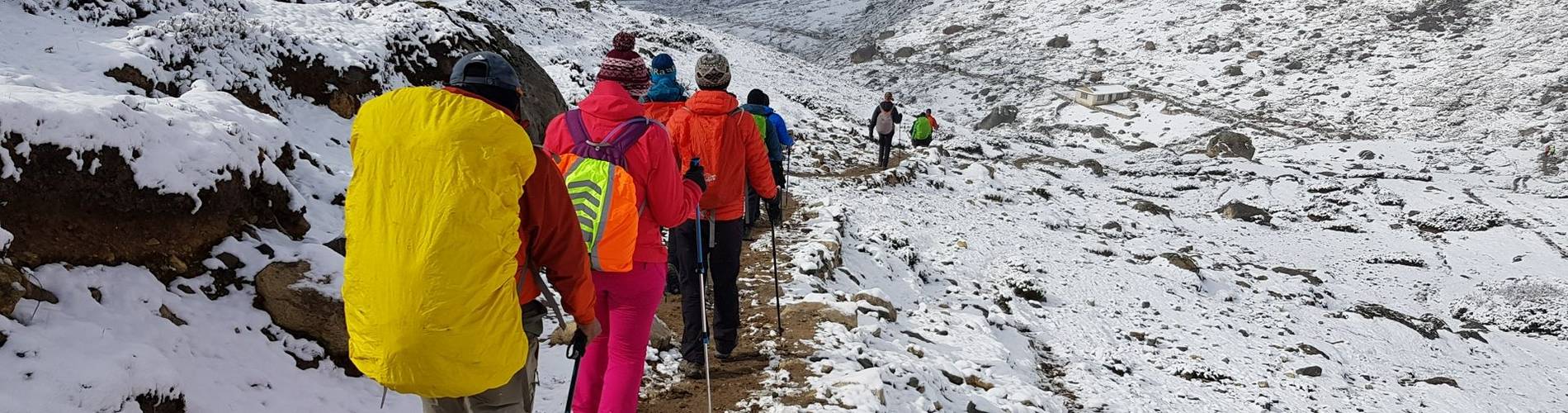
How Much Distance And Elevation Gain Is The Everest Base Camp Trek?
Your journey to Everest Base Camp begins when you arrive in the vibrant and fascinating city of Kathmandu. Sitting at around 1,400m (4,593ft), Kathmandu is the perfect place to spend a couple of days before your trek begins. It gives you time to adjust to the altitude, prepare for the adventure ahead and get yourself physically and mentally ready for the journey.
While you’re in Kathmandu, we recommend getting out and exploring the city rather than spending all your time resting. You could explore the Kathmandu Valley, soak up the local culture or wander through Thamel, the city’s famous trekking hub. It’s a great place to pick up any last-minute gear you might need for the trek, and there are plenty of coffee shops where you can relax and take in the atmosphere.
From Kathmandu, you’ll take a short 25–30-minute flight into the heart of the Himalayas, arriving in the small mountain town of Lukla at around 2,850m (9,350ft). This is where the trekking adventure really begins.
Depending on your EverTrek itinerary, you’ll spend around 12–16 days trekking through the Himalayas. Our Classic Everest Base Camp itinerary includes three nights in Namche Bazaar, with two nights dedicated to acclimatisation on the way to Everest Base Camp and one night on the return journey.
Namche Bazaar sits at around 3,440m (11,286ft) and is a crucial acclimatisation point on the trek. Spending time here allows your body to gradually adjust to the increasing altitude before you continue higher into the Himalayas. This is particularly important because you’ll be trekking in a low-oxygen environment and tackling more than 8,000m (26,500ft) of cumulative ascent and descent throughout the journey.
It’s physically demanding, but taking the time to acclimatise properly can make a huge difference to how you feel further up the trail. And while you’re in Namche, don’t forget to check out one of the local bakeries – you’ve earned it!
Here's a more detailed break down of what to expect on your Everest Base camp Trek.
Day 1: Arrive In Kathmandu
Your Everest Base Camp adventure begins in Kathmandu, Nepal’s vibrant capital and gateway to the Himalayas.
Day 1 isn’t a trekking day. After arriving at Tribhuvan International Airport, you’ll have time to rest, recover from your journey and settle into your surroundings.
Day 2: Kathmandu – Sightseeing, Trek Preparation And Transfer To Mulkot
Day 2 is focused on sightseeing and preparing for the trek ahead.
You’ll explore the cultural heart of the Kathmandu Valley before travelling by road towards Mulkot. The drive takes approximately 5–6 hours and sets you up for an early start the following morning.
You’ll then travel to Ramechhap Airport for your flight to Lukla - a very exciting part of the trip!
Day 3: Lukla to Phakding
Lukla: 2,850m / Phakding: 2,652m (8,700ft)
This is the day where your Everest Base Camp trek officially begins!
Once you have flown from Ramechhap to Lukla and landed at the famous Tenzing-Hillary Airport, you’ll meet your trekking crew and porters before setting off through Lukla.
The first stage of the trail follows a stone-paved route through traditional Sherpa villages, passing prayer rocks and mani walls before gradually descending towards Phakding.
Compared with the days ahead, this is a relatively gentle introduction to trekking in the Himalayas.
Once you reach Phakding, you’ll have time to enjoy lunch and explore the village or visit a nearby monastery.
Day 4: Phakding to Namche Bazaar
Day 4 is where the Everest Base Camp trek starts to become more demanding.
You’ll follow the Dudh Koshi River and cross several suspension bridges while passing through villages including Zapute, Toktok, Benkar and Chumoa.
At Monjo, you’ll enter Sagarmatha National Park before continuing towards Namche Bazaar.
The final approach is the major challenge of the day: a tough ascent of around two hours into Namche.
Your reward is arriving at the bustling Sherpa trading hub of Namche Bazaar, surrounded by spectacular Himalayan scenery.
If conditions are clear, you may also catch your first glimpse of Mount Everest, along with Lhotse and Kusum Khangru.
Day 5: Acclimatisation Day in Namche Bazaar
Day 5 is an important acclimatisation day.
That doesn’t mean sitting around all day. Instead, you’ll take part in an active acclimatisation hike to help your body adjust to the altitude before you continue higher into the Himalayas.
You’ll visit the Tenzing Norgay statue and Sherpa Museum before continuing towards the Everest View Hotel.
The hike takes you higher above Namche before returning to the village to sleep at 3,440m.
This is an important part of the Everest Base Camp itinerary because it allows you to climb higher during the day before returning to sleep at a lower altitude.
Day 6: Namche Bazaar To Tengboche
Leaving Namche behind, you’ll continue along the famous Pangboche trail.
This section of the Everest Base Camp trek is known for spectacular mountain scenery, with views towards Everest, Lhotse, Nuptse and Ama Dablam.
The trail initially descends towards the valley floor before reaching the Dudh Koshi River at around 3,250m.
After lunch, the trail changes character as you begin the sustained climb towards Tengboche.
The ascent takes approximately 2–3 hours, eventually bringing you to the famous Tengboche Monastery.
Day 7: Tengboche to Dingboche
Tengboche: 3,867m / Dingboche: 4,410m (14,470ft)
Today takes you deeper into the Himalayas as you continue towards Dingboche.
The route initially descends through beautiful woodland before crossing a suspension bridge. From there, the trail gradually climbs through the valley towards Pangboche at 3,985m.
After lunch, you’ll continue upwards into the spectacular Imja Valley.
The final section is the steepest climb of the day before you reach Dingboche at 4,410m.
At this point, you’re firmly into high-altitude trekking territory, and the increasing elevation makes the uphill sections feel considerably harder.
Day 8: Acclimatisation Day In Dingboche
Dingboche: 4,410m (14,470ft)
Your second major acclimatisation day takes place in Dingboche.
You’ll hike towards Nangkarstshang Peak, climbing above the village before descending back to Dingboche.
If the weather is clear and the group is feeling strong, there’s an opportunity to reach 5,000m for the first time during the trek.
That’s a significant milestone.
At this altitude, the climb can feel tough, but the effort is worthwhile. You’ll have panoramic views towards Ama Dablam, Lhotse and the Imja Khola Valley.
After reaching your high point, you’ll descend back to Dingboche and spend another night at 4,410m.
Day 9: Dingboche to Lobuche
Dingboche: 4,410m → Lobuche: 4,940m (16,210ft)
The trek now enters the higher reaches of the Khumbu Valley.
You’ll gradually ascend through the Khumbu Khola Valley with views towards Cholatse and Taboche, while Chola Lake and Mt. Pumori become part of the spectacular Himalayan scenery.
After crossing a glacial-fed river, you’ll reach Dughla for lunch.
From here comes one of the most significant climbs of the day: the ascent to the memorial hill.
The cairns and memorials here honour Sherpas and climbers who have lost their lives on Everest and surrounding peaks.
After taking time to reflect, you’ll continue upwards into the upper Khumbu Valley before reaching Lobuche at 4,940m.
At nearly 5,000m, altitude is now one of the biggest factors affecting how hard the trek feels.
Day 10: Lobuche To Gorak Shep To Everest Base Camp
Lobuche: 4,940m → Everest Base Camp: 5,364m (17,598ft)
This is the day you’ve been working towards.
The trek from Lobuche takes you above 5,000m and towards Gorak Shep, the highest settlement on the Everest Base Camp route.
You’ll cross rugged glacial moraine as you gradually gain altitude towards Gorak Shep.
After stopping for lunch and refuelling, you’ll continue towards the ultimate goal: Everest Base Camp.
At 5,364m (17,598ft), Everest Base Camp is the highest point reached on the main trek itself.
You’ll have time to celebrate, take photographs and enjoy the achievement before retracing your steps back to Gorak Shep, where you’ll spend the night at 5,164m (16,942ft).
This is one of the most demanding days of the Everest Base Camp trek, not simply because of the terrain but because you’re now trekking at extreme altitude.
Day 11: Kala Patthar And Descent To Pheriche
Kala Patthar: 5,550m (18,204ft)
For those feeling strong, Day 11 begins with an optional early-morning climb to Kala Patthar.
You’ll set off at around 4:00am for the approximately two-hour uphill climb.
At 5,550m, Kala Patthar is the highest point mentioned in the current EverTrek itinerary and provides spectacular sunrise views over Everest and the surrounding Khumbu peaks.
After taking in the views, you’ll descend to Gorak Shep and regroup before beginning the journey down towards Pheriche.
This is where the benefits of losing altitude become noticeable. As you descend, the amount of oxygen available increases, and the trekking should progressively feel easier.
Day 12: Pheriche To Namche Bazaar
Namche Bazaar: 3,440m (11,283ft)
After reaching Everest Base Camp and Kala Patthar, the route now heads back down through the Khumbu Valley.
The trail is relatively gentle to begin with before a short climb through rhododendron forests towards Tengboche.
You may have time to revisit Tengboche Monastery or enjoy a tea break surrounded by some of the trek’s most spectacular mountain scenery.
From Tengboche, the trail descends steeply towards the Dudh Koshi River before becoming more undulating as you make your way back towards Namche Bazaar.
By now, you’ll have lost a significant amount of altitude compared with the previous few days, making the walking feel easier from an altitude perspective.
Day 13: Namche Bazaar To Lukla
Namche Bazaar: 3,440m / Lukla: 2,652m (8,700ft)
This is your final day of trekking.
You’ll retrace the route towards Lukla, crossing the famous Hillary Suspension Bridge and passing through the Sherpa villages you’ve already encountered on the way up.
You’ll stop for lunch in Phakding before continuing through forests, prayer stones and colourful prayer flags towards Lukla.
Once you reach Lukla, you’ll pass through the trekking gate and celebrate with your guides and porters.
The Everest Base Camp trek is complete.
Day 14: Lukla To Ramechhap To Kathmandu
Your final morning in the Khumbu begins with your flight from Lukla.
After saying goodbye to your porters, you’ll board the flight and enjoy your final aerial views of the Himalayas.
Most likely, you’ll land at Ramechhap before transferring by road to Kathmandu. The drive can take approximately 5–7 hours, with breaks along the way.
Back in Kathmandu, you’ll regroup for a celebratory dinner and reflect on completing your Everest Base Camp adventure.
Day 15: Farewell From Nepal
Your Everest Base Camp adventure comes to an end.
There’s no strict departure time, although an early afternoon international flight is recommended where possible.
Because flights to and from Lukla are weather-dependent and delays can happen, EverTrek recommends considering an additional night in Kathmandu for extra flexibility.
Then it’s time to say goodbye to Nepal.
FAQs
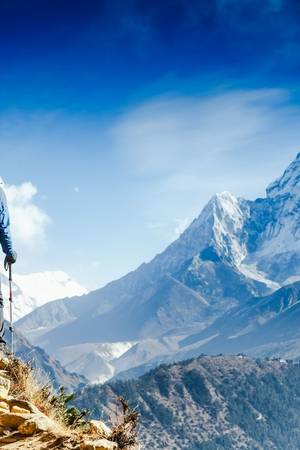
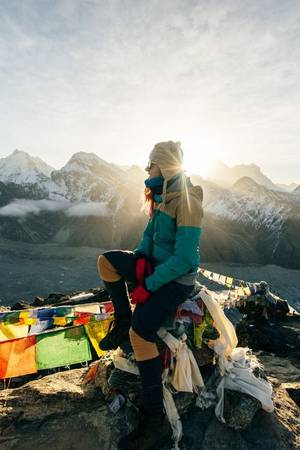
Everest Base Camp Via Gokyo Valley
- This trek package is more than seeing Everest from a different angle.
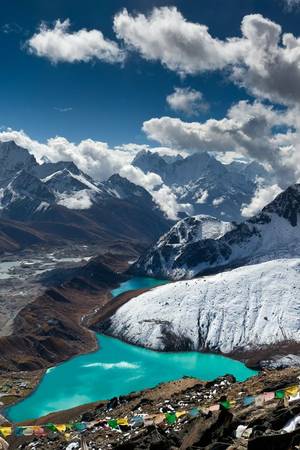
- Trekking to Everest Base Camp via Gokyo Valley takes you beyond the classic route, through peaceful Sherpa villages, past the stunning turquoise lakes of Gokyo, and up to the breathtaking viewpoint of Gokyo Ri.
- You'll cross the dramatic Cho La Pass before rejoining the main trail to Base Camp.
Ultimate Island Peak and Everest Base Camp Expedition
- This is the full trekking Himalayan experience, offering an epic loop through the Khumbu region.
- This Island Peak and Everest Base Camp trek throws in everything from Gokyo’s glacial lakes to the legendary passes of Cho La and Kongma La.
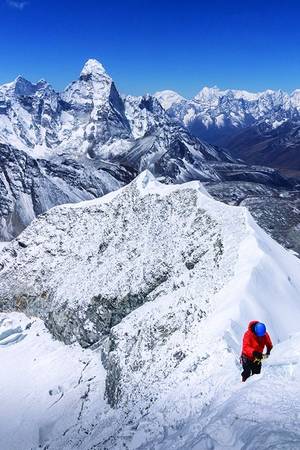
- After ticking off Everest Base Camp, you’ll swap trekking poles for ice axes as you rope up for the ultimate finale: a climb to the summit of Island Peak at 6,189m.
Everest Three Passes trek
- Trekking in the Himalayas doesn’t get much wilder than this.
- If you’re looking for a true Everest adventure, our 19-day Three Passes Trek is the expedition for you.
- You’ll cross Renjo La, Cho La, and Kongma La to form a challenging circuit through some of the most remote, rugged, and awe-inspiring terrain in Nepal.

 View trip