 WhatsApp us


 Best Sellers
 Bucket List Adventures
 Short Trips
 Training Weekends
 Epic Peaks
 Remote Adventures
 Hardcore Challenges
 Multi-Activity Adventures
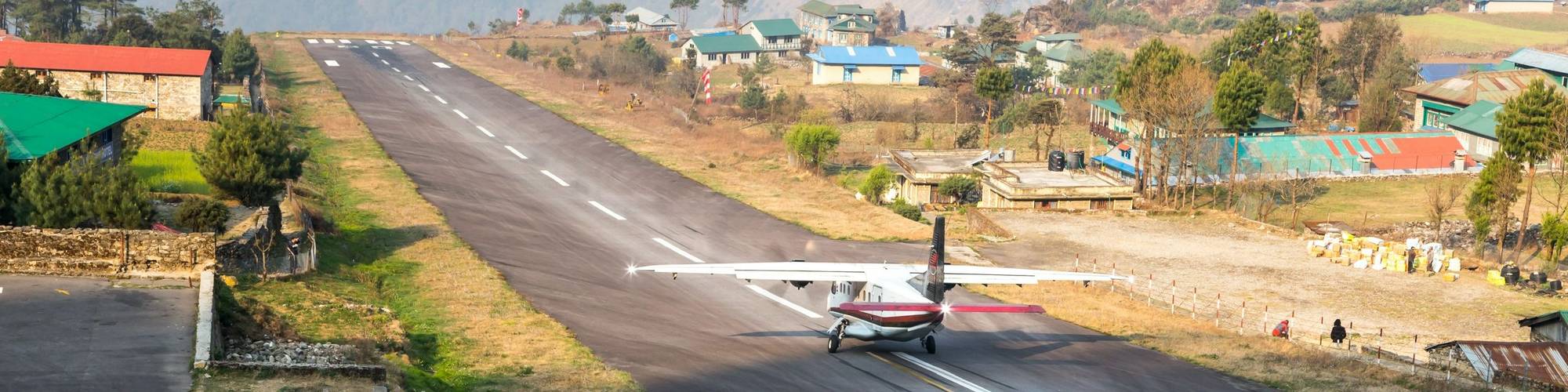
If you're heading to Everest Base Camp or any other Nepal trek involving Lukla Airport, there's one part of the journey that often surprises people: You likely won’t be flying from Kathmandu.
Since 2019, the Government of Nepal and the Civil Aviation Authority of Nepal (CAAN) have required most flights to and from Lukla to operate out of Ramechhap (Manthali Airport), not Kathmandu’s Tribhuvan International Airport.
While this may sound like an inconvenience at first, it’s actually proven to be a smart move. Flights from Ramechhap are typically more reliable and experience fewer delays. Still, it’s important to know what to expect so you can prepare and embrace it as part of your adventure.
Since 2019, the Government of Nepal and the Civil Aviation Authority of Nepal (CAAN) have required most flights to and from Lukla to operate out of Ramechhap (Manthali Airport), not Kathmandu’s Tribhuvan International Airport.
While this may sound like an inconvenience at first, it’s actually proven to be a smart move. Flights from Ramechhap are typically more reliable and experience fewer delays. Still, it’s important to know what to expect so you can prepare and embrace it as part of your adventure.
Why can’t trekkers travel to Lukla via Kathmandu Airport?
This switch was originally introduced due to construction and expansion works at Kathmandu Airport. However, the benefits soon became clear:
As a result, CAAN has continued to enforce this change during most trekking seasons, with Ramechhap often becoming the dedicated airport for all Lukla flights from around mid-March in spring to late September in autumn.
- Reduced delays thanks to lower air traffic
- More flight slots to Lukla
- A smoother experience for trekkers in the long run
As a result, CAAN has continued to enforce this change during most trekking seasons, with Ramechhap often becoming the dedicated airport for all Lukla flights from around mid-March in spring to late September in autumn.
What this means for your itinerary
The good news is that your trip duration doesn’t change. You can still book your international arrival and departure flights as usual. However, the switch to Ramechhap Airport does change the timing of your journey within Nepal, including an extra day of travel by road.
Flying out to Lukla
On Day 2, after a morning of sightseeing in Kathmandu, you'll travel about 4 hours by road to Mulkot, where you’ll stay overnight. Mulkot is about 1 hour from Ramechhap Airport.
On Day 3, you’ll wake early (around 4–5am, depending on flight schedules) to reach the airport for your flight to Lukla.
In rare cases, you may drive directly from Kathmandu to Ramechhap early on Day 3. This will be decided by our in-country team based on the latest operational updates, weather, and flight history.
On Day 3, you’ll wake early (around 4–5am, depending on flight schedules) to reach the airport for your flight to Lukla.
In rare cases, you may drive directly from Kathmandu to Ramechhap early on Day 3. This will be decided by our in-country team based on the latest operational updates, weather, and flight history.
Flying back from Lukla
After your trek, you’ll return to Ramechhap by plane, followed by a long but scenic drive (5–7 hours) back to Kathmandu. Our team will ensure you're comfortable, with breaks and support available along the way.
What kind of transport is used?
We arrange private transport for all EverTrekkers travelling to and from Ramechhap. The size of the vehicle depends on the number of trekkers flying that day:
- 1–2 people: Private car
- Up to 12 people: Toyota minivan
- More than 12 people: Larger bus or multiple vans
The benefits of flying from Ramechhap
While the drive to Ramechhap can add some time and bumps to the journey, there are a number of real advantages:
Plus, it gives you a glimpse of rural Nepal that most travellers miss — a bonus adventure on the way to the big one.
- Increased flight availability
- Shorter flight time (just 17 minutes to Lukla)
- Minimal air traffic, so fewer delays
- Better chance of getting in and out during the brief good-weather windows
Plus, it gives you a glimpse of rural Nepal that most travellers miss — a bonus adventure on the way to the big one.
Who arranges internal flights on an EverTrek trek?
All internal flights in Nepal, including to and from Lukla, are arranged and sold by our trusted in-country supplier and do not form part of your package with us.
While EverTrek coordinates the overall trek experience and provides full support, we do not book or sell these flights directly. EverTrek accepts no liability for the provision, cancellation, or amendment of these flight services, as they fall outside the scope of your contract with us.
We want to be transparent and make sure you're fully informed, and of course, we're always here to guide and support you before, during, and after your adventure.
While EverTrek coordinates the overall trek experience and provides full support, we do not book or sell these flights directly. EverTrek accepts no liability for the provision, cancellation, or amendment of these flight services, as they fall outside the scope of your contract with us.
We want to be transparent and make sure you're fully informed, and of course, we're always here to guide and support you before, during, and after your adventure.
Paying for your flights
You will be contacted directly by the supplier with a secure payment link 2-3 months before your trip to confirm your flight details and arrange payment directly to them. You’ll have until 30 days before departure to complete the payment.
The cost of your internal flight and transfers is approximately $450 USD per person (+4% transaction fee), equating to approximately £344 GBP.
Our local partners are highly experienced and monitor weather conditions, airline operations, and flight availability constantly. They’ll make sure everything is sorted and that you get the best chance of flying safely and on time.
The cost of your internal flight and transfers is approximately $450 USD per person (+4% transaction fee), equating to approximately £344 GBP.
Our local partners are highly experienced and monitor weather conditions, airline operations, and flight availability constantly. They’ll make sure everything is sorted and that you get the best chance of flying safely and on time.
What about weather delays?
Flying in the Himalayas means dealing with unpredictable weather. Weather delays are common, and they can happen from either Kathmandu or Ramechhap.
Our in-country supplier constantly monitors conditions and works hard to get you on the next available flight. However, in some cases, bad weather can ground flights for multiple days.
If needed, helicopters can be arranged. These often fly when planes can’t, though they come with an extra cost — typically between £400–£550 per person, depending on demand. Make sure your travel insurance covers trip delays, as this can help cover helicopter or accommodation costs if things get stuck for a while.
Our in-country supplier constantly monitors conditions and works hard to get you on the next available flight. However, in some cases, bad weather can ground flights for multiple days.
If needed, helicopters can be arranged. These often fly when planes can’t, though they come with an extra cost — typically between £400–£550 per person, depending on demand. Make sure your travel insurance covers trip delays, as this can help cover helicopter or accommodation costs if things get stuck for a while.
Contact our Yeti team for advice, guidance, and support
We’re here for you at every step throughout your trek. If you have questions about internal flights, itineraries, or anything else, don’t hesitate to email us at This email address is being protected from spambots. You need JavaScript enabled to view it., call 02920 003 216, or submit an online contact form.
Rest assured that you’ll be supported by your EverTrek guide in Kathmandu, as well as your experienced local guide, who will make sure you (and your bags!) arrive safely in Lukla and back again.
Rest assured that you’ll be supported by your EverTrek guide in Kathmandu, as well as your experienced local guide, who will make sure you (and your bags!) arrive safely in Lukla and back again.
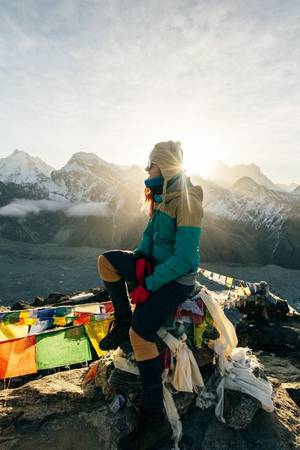
Everest Base Camp Via Gokyo Valley
- This trek package is more than seeing Everest from a different angle.
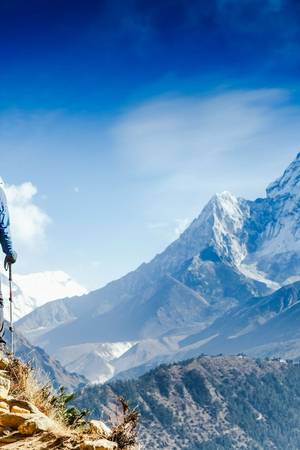
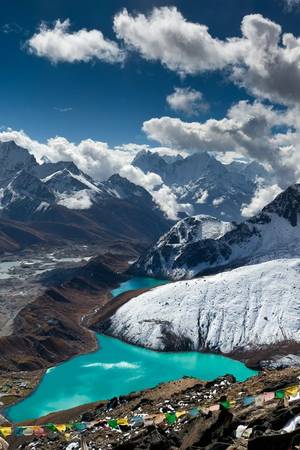
- Trekking to Everest Base Camp via Gokyo Valley takes you beyond the classic route, through peaceful Sherpa villages, past the stunning turquoise lakes of Gokyo, and up to the breathtaking viewpoint of Gokyo Ri.
- You'll cross the dramatic Cho La Pass before rejoining the main trail to Base Camp.
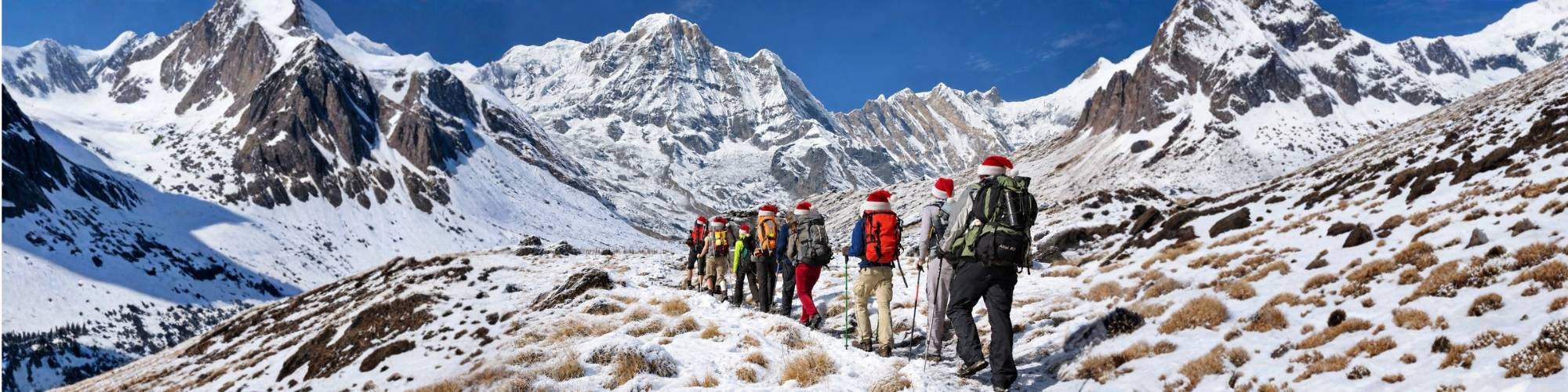
Everest Three Passes trek
- Trekking in the Himalayas doesn’t get much wilder than this.
- If you’re looking for a true Everest adventure, our 19-day Three Passes Trek is the expedition for you.
- You’ll cross Renjo La, Cho La, and Kongma La to form a challenging circuit through some of the most remote, rugged, and awe-inspiring terrain in Nepal.

 View trip