 WhatsApp us


 Best Sellers
 Bucket List Adventures
 Short Trips
 Training Weekends
 Epic Peaks
 Remote Adventures
 Hardcore Challenges
 Multi-Activity Adventures
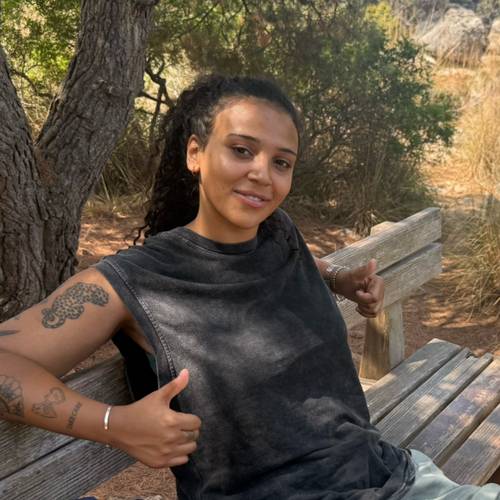
A Guest Story From Marc Jerrard
For this guest article, we’re handing the trail over to Marc Jerrard, writer behind Walking in Circles. Having previously trekked to Everest Base Camp and the Gokyo Valley, Marc shares the doubts, challenges and moments that shaped his experience in the Himalayas - and what he learned by simply saying yes.
In his own words, Marc takes us from wondering “Could I really do this?” to standing at Everest Base Camp, before looking ahead to his next Himalayan challenge - the Everest Three Passes Trek in 2028 with EverTrek!
Everest had fascinated me for as long as I could remember.
As a child, it seemed almost mythical. The highest mountain in the world. A place that seems to sit above everything else - both metaphorically and literally. I’m not sure there was one particular climber or expedition that sparked it. It was probably a mixture of things - mountains, adventure and perhaps a little bit of Bilbo Baggins.
Then, of course, life happened.
The childhood dream never completely disappeared, but it was pushed into the background by work, family and all the other things that fill the years. Everest became somewhere I would see on television or in a photograph and think, imagine going there.
I never seriously thought I would.
That changed after a 25km training walk along the Thames Path. Afterwards, while recovering from aching legs, I found myself browsing websites and clicking on international treks.
And there it was.
I spotted a presentation about the trek and decided to go along, although I genuinely didn’t think for one moment that I would sign up.
But something struck me when I walked into the room - how reassuringly normal everybody looked. These weren’t elite athletes or hardened mountaineers. They looked rather like me: ordinary people considering doing something decidedly unordinary.
Then the presentation started.
There were photographs of enormous mountain landscapes, brightly coloured prayer flags and tiny villages beneath snow-covered peaks. But what really changed things for me was seeing the journey broken down day by day.
Everest Base Camp stopped looking like one enormous, impossible challenge.
It became a series of steps.
I’d walked into that room thinking, How could I possibly do that?
By the time I left, the question had changed… why couldn’t I?
The mountain hadn’t gotten any smaller. I hadn’t suddenly become fitter or braver. But Everest Base Camp felt possible.
I went home and told my wife, Marissa:
“I’m going to Everest.”
She smiled.
“Of course you are.”
The following day, I signed up.
Training For The Everest Base Camp Trek: Could I Really Do It?
My family thought I was nuts.
There was excitement, but concern too. Friends were equally supportive in their own special way. One particularly helpful comment was:
“Just don’t expect me to bring your body back.” Thanks for that.
But I’d said I was going to Everest. Now I had to prove to everyone - and perhaps mostly myself - that I meant it.
So I started training. And I mean really training - although it quickly became clear that preparing for an Everest Base Camp trek didn’t mean becoming some kind of superhuman. It was about gradually building up my fitness, getting used to spending long days on my feet and giving myself the confidence of knowing I was prepared.
I joined a gym, took on longdistance walking challenges and spent countless weekends putting miles into my legs. I wanted to arrive in Nepal knowing I’d done everything I could to prepare myself.
The more I trained, the more Everest Base Camp changed from something I dreamed about into something I was actually going to do.
Eventually, after years of imagining it, preparing for it and wondering whether I really could do it, I got on a plane to Nepal.
Confidence isn’t knowing the answer...it’s simply being willing to take the first step and find out.
Arriving In Nepal: My First Experience Of The Himalayas
Our flight to Lukla was cancelled, but it gave us an unexpected afternoon in Kathmandu and my first visit to Boudhanath temple.
It was there that I began to fall in love with Nepal. And what struck me first wasn’t the mountains, I hadn’t even reached them yet. It was the people.
Complete strangers would catch my eye and smile. Not the polite half-smile you sometimes exchange with someone you don’t know, but huge, genuine smiles that seemed to reach their eyes. There was a warmth and openness that made me feel welcomed immediately. I was thousands of miles from home, yet somehow Nepal already felt surprisingly familiar.
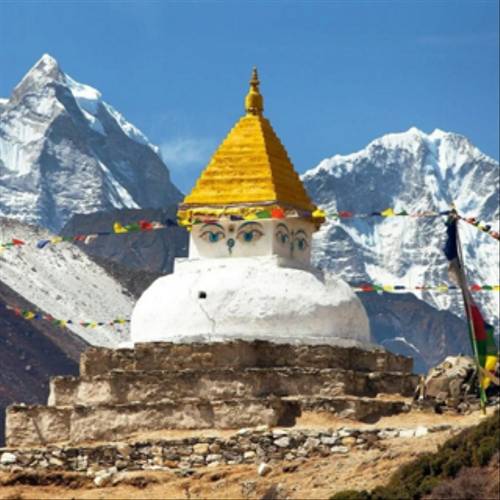
At Boudhanath, with people walking around the great white stupa, prayer wheels turning and prayer flags overhead, there was something wonderfully peaceful about it all. I was in a completely unfamiliar place, in a country I’d never visited before, yet somehow I didn’t feel like an outsider.
Instead, I felt as though I was being welcomed into a place that had its own rhythm, traditions and way of life, and I was lucky enough to be able to experience it. It was one of the first moments when I realised that trekking in Nepal was going to be about far more than simply getting to Everest Base Camp.
Eventually, we made it into the mountains by helicopter, landing at Surke and hiking in the dark to Chaurikharka.
The following day, our lead Sherpa guide, Jangbu, took us to his home and introduced us to his wife and child.
That same warmth was there again.
We’d barely started the trek, but already I was beginning to understand something I hadn’t expected when I’d dreamed about Everest all those years ago.
The mountains might have brought me to Nepal, but they weren’t going to be the only thing I remembered about it.
From there, the trek really began - and so did my introduction to “Nepali flat.”
For the uninitiated, Nepali flat does not mean flat.
It means up a bit. Down a bit. Up again. Down again. Repeat until your legs begin questioning some of your recent life choices.
And after all that came the very real climb to Namche Bazaar.
Five of us were bringing up the rear. By the time we arrived, I was shattered, but everyone else was waiting for us.
Before Nepal, many of us had been little more than names and profile pictures in a WhatsApp group. Yet the welcome we received felt like being reunited with old friends.
This was no longer just my Everest Base Camp adventure.
It was becoming ours.
Unfortunately, my legs were less enthusiastic about this new spirit of togetherness. They seized up. The following day, simply climbing a few flights of stairs left me struggling for breath, which worried me more than the aching legs.
Namche sits at around 3,400 metres. We were still near the beginning and from here we would be going higher. Much higher.
I’d trained hard for this, but there was one thing I couldn’t properly train for back home: altitude.
Was this simply my body adjusting? Or a warning of what was to come?
If a few flights of stairs in Namche were leaving me breathless, what was I going to feel like above 5,000 metres?
The question came back.
Could I really do this?
Only now I wasn’t at home looking at photographs of Everest Base Camp.
I was in the Himalayas.
I think that was the important thing. Doubting yourself didn’t mean you weren’t capable of continuing. It simply meant you were facing something unfamiliar. All I needed to do was keep going.
Seeing Mount Everest For The First Time
There is a classic viewpoint above Namche where trekkers often get their first glimpse of Everest.
We got clouds.
In a strange way, it only made the moment when the mountains finally revealed themselves feel even more special.
First came Ama Dablam - impossibly beautiful, rising above us as we walked deeper into the Himalayas.
Then the clouds shifted.
There it was.
Everest.
Alongside it, Lhotse.
Conversations stopped. Cameras came out. We just stood there, staring.
For years, Everest had existed in photographs, television programmes and childhood dreams.
Now I could actually see it.
It was there.
And more importantly, so was I.
The doubts hadn’t disappeared. There was still a long way to go.
But for the first time since arriving in the Himalayas, I found myself thinking: I might actually do this.
And I was beginning to realise that reaching Everest Base Camp wasn’t the only destination that mattered. The whole trek was part of the journey - every village, every climb, every difficult morning and every moment when I wondered whether I could keep going. Base Camp would be a huge milestone, but the experience of getting there was already changing me.
As we climbed higher, the days settled into a rhythm.
We walked together. Ate together. Played UNO around teahouse tables. We shared the good days, the difficult days and rather more information about each other’s toilet habits than any group of relative strangers probably needs to know.
You get to know people remarkably quickly in the mountains. That became one of the best parts of the whole experience.
When someone struggled, somebody else was there. There was encouragement, laughter and a growing sense that whatever happened, we were doing this together.
The question I’d started with had been: Could I really do Everest Base Camp? Somewhere along the trail, it had quietly become: Could we do it?
What It Really Felt Like Reaching Everest Base Camp
The final walk to Everest Base Camp was exhausting.
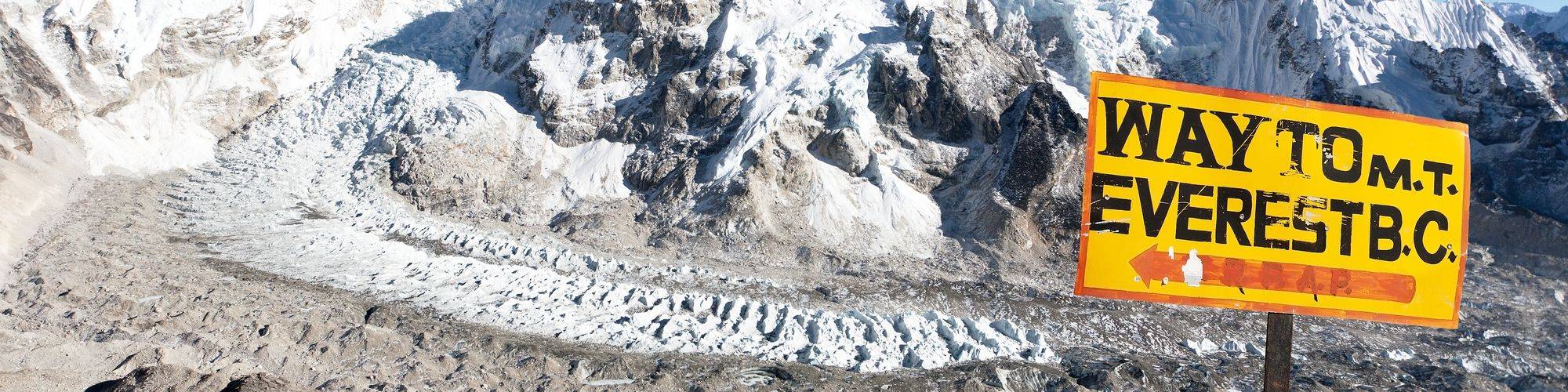
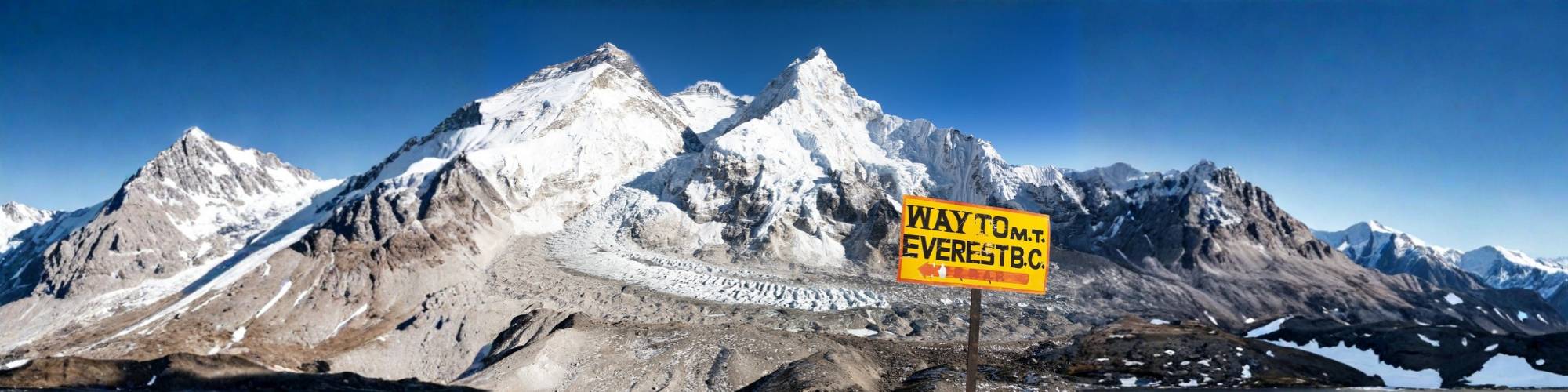
The air was thin, my lungs were working overtime and it had already been a long day when Everest Base Camp finally came into view - the place I had spent years imagining, but never truly believed I would one day see with my own eyes.
I’d seen that image countless times before. Now it was my turn.
I picked my way slowly across the rocks and boulders towards it.
And that’s when it really began to sink in.
This wasn’t a photograph anymore. It wasn’t a childhood dream, a presentation or a date in a diary.
I was actually there.
I tried to record a video.
I didn’t get very far.
The emotion hit me and I crumbled.
Exhaustion. Happiness. Relief. Disbelief. Pride.
I’d done it.
Me. Marc. The bloke who had once looked at a photograph of Everest Base Camp and wondered whether someone like me could ever make it there. The man who had spent years carrying that quiet doubt around with him, never quite knowing whether the dream was bigger than he was.
Somehow, I’d made it to Everest Base Camp - on my own two feet.
For years, I’d been asking myself the same question.
Could I really do Everest Base Camp?
Now I had my answer.
Yes. I could.
Beyond Everest Base Camp: Cho La Pass To Gokyo
There was just one fairly significant challenge ahead.
I still had Cho La to get over.
Our trek was continuing towards Gokyo Lakes, crossing Cho La on the way. I knew it would be challenging.
I just hadn’t appreciated quite how challenging.
The weather changed. Snow transformed the landscape and, at one point, I remember looking up towards the pass and thinking:
I’ve got to get up that?
It was steep. We were tired. There were sections where we needed ropes and cables, and progress became a matter of concentrating on the next few metres.
One step. Then another.
Eventually, we reached the top.
Then I looked at the other side.
Getting up, it turned out, was only half the challenge. There were sections of the descent so steep that we had to turn around and make our way down backwards.
Looking back, there’s probably a temptation to tell myself that by then I’d conquered my doubts and become fearless - I hadn’t.
I still wondered whether I could do things. I still occasionally wondered what on earth I’d got myself into.
What had changed was simpler.
I’d stopped treating doubt as a reason not to try.
Perhaps confidence isn’t knowing the answer.
Sometimes it’s simply being willing to take the first step and find out.
What I Learned From Trekking In The Himalayas
After Cho La, we followed the vast Ngozumpa Glacier towards Gokyo.
Eventually, we climbed a steep moraine and the view opened up beneath us.
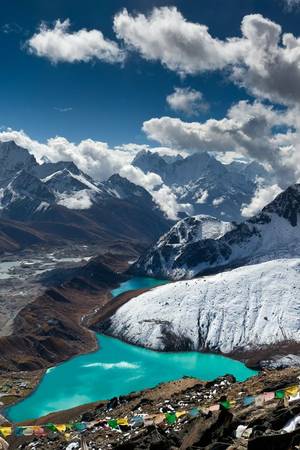
The main Gokyo Lake was an extraordinary turquoise blue, with a wall of snow-capped mountains behind it and the tiny village of Gokyo sitting beside the water. After everything Cho La had thrown at us, it felt like a reward.
Years earlier, when I’d dreamed about Everest, the adventure had been about one mountain.
But standing above Gokyo, I realised how much more the journey had become.
I’d imagined the mountain. I hadn’t imagined everything - and everyone - that came with it.
The landscapes. The people. The friendships. The difficult days. The laughter. Places whose names had once meant nothing to me had become part of my own story simply because I had walked through them.
I’d gone to Nepal to see Everest.
I left having discovered an entire world beyond it - the Himalayas.
Eventually, of course, I had to come home.
You can leave the Himalayas. I’m not sure the Himalayas ever entirely leave you.
Perhaps that explains why, in 2028, I’m returning to the Everest region with EverTrek.
This time the challenge is the Everest Three Passes Trek - Kongma La, Cho La and Renjo La.
I’ve already crossed Cho La once, so perhaps I should have known I wouldn’t be able to resist coming back for another challenge.
And yes, I’ve asked myself the question again.
Can I really do the Three Passes?
It’s a bigger challenge. There will be difficult days. The altitude will test me again. And I can’t guarantee that I’ll succeed, but I don’t think I need to know the answer anymore.
Back then, the question was whether I could make it to Everest Base Camp - now it’s whether I can take on the Three Passes.
I’m still not entirely sure I can do that either.
And perhaps that’s the point.
What I’ve learnt by saying yes is that you don’t always need to know whether you’re capable of something before you start. Sometimes, you just have to believe in yourself enough to begin - and let the journey show you just how far you can go.
Why I Chose EverTrek For My Next Trip
After visiting Nepal for the first time, I knew it would be one of those places that I’d keep going back to.
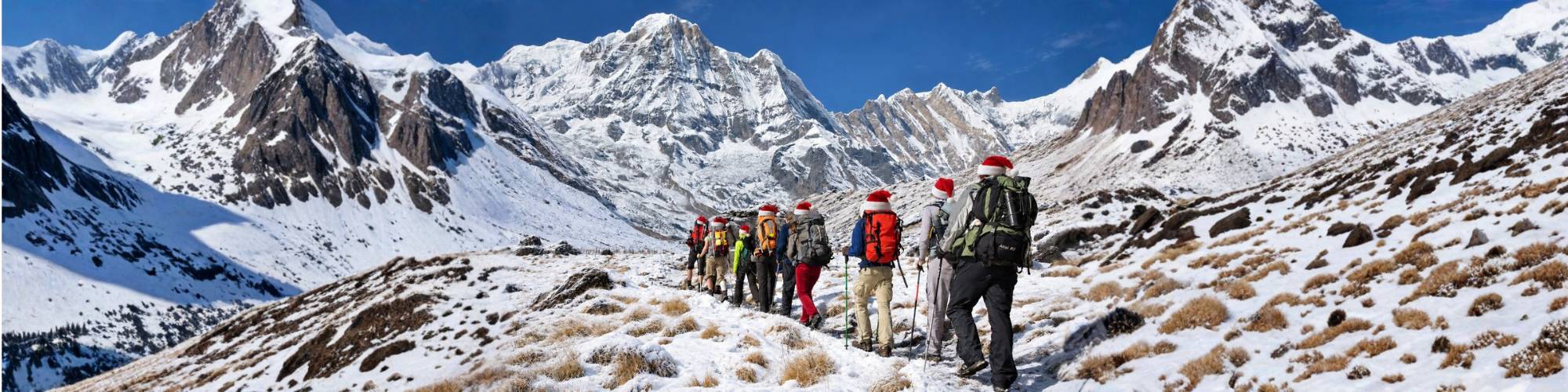
That feeling brought me back in 2024 to trek the Annapurna Circuit, and now it’s pulling me back again for the Everest Three Passes Trek.
When I started looking at the Three Passes, my conversations with EverTrek quickly felt different.
From my first conversations with Will and the team, there was a warmth and genuine interest that really stayed with me.
It didn’t feel like I was simply enquiring about a trek or booking a place on an itinerary.
It felt like they were genuinely interested in my story, my experiences in Nepal and why I wanted to go back.
There’s something really special about feeling that the people organising your adventure are excited about it with you.
They don’t just seem to see Nepal as a destination or a route on a map - they understand what it means to the people who go there.
The Three Passes Trek feels like the next chapter, and I’m incredibly excited to share it with EverTrek.
The Start Of Walking In Circles
I started Walking in Circles after returning from Nepal as a place to share my experiences of hiking, trekking and adventure. What began with my Everest Base Camp and Gokyo Lakes journey has grown into a website covering UK walking challenges, Nepal and the Himalayas, trekking guides and adventures closer to home.
My Nepal journey also became my book, Everest Base Camp & Gokyo Lakes: A Midlife Journey to the World’s Greatest Trek, published in 2026.
Explore Walking in Circles: walkingincirclesuk.com
Follow along on Instagram: @marc.jerrard.7
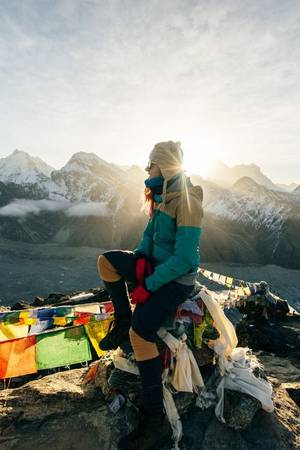
Everest Base Camp Via Gokyo Valley
- This trek package is more than seeing Everest from a different angle.
- Trekking to Everest Base Camp via Gokyo Valley takes you beyond the classic route, through peaceful Sherpa villages, past the stunning turquoise lakes of Gokyo, and up to the breathtaking viewpoint of Gokyo Ri.
- You'll cross the dramatic Cho La Pass before rejoining the main trail to Base Camp.
Everest Three Passes trek
- Trekking in the Himalayas doesn’t get much wilder than this.
- If you’re looking for a true Everest adventure, our 19-day Three Passes Trek is the expedition for you.
- You’ll cross Renjo La, Cho La, and Kongma La to form a challenging circuit through some of the most remote, rugged, and awe-inspiring terrain in Nepal.

 View trip
